No products in the basket.

 Zakaria Belkhay
April 22, 2026
Zakaria Belkhay
April 22, 2026
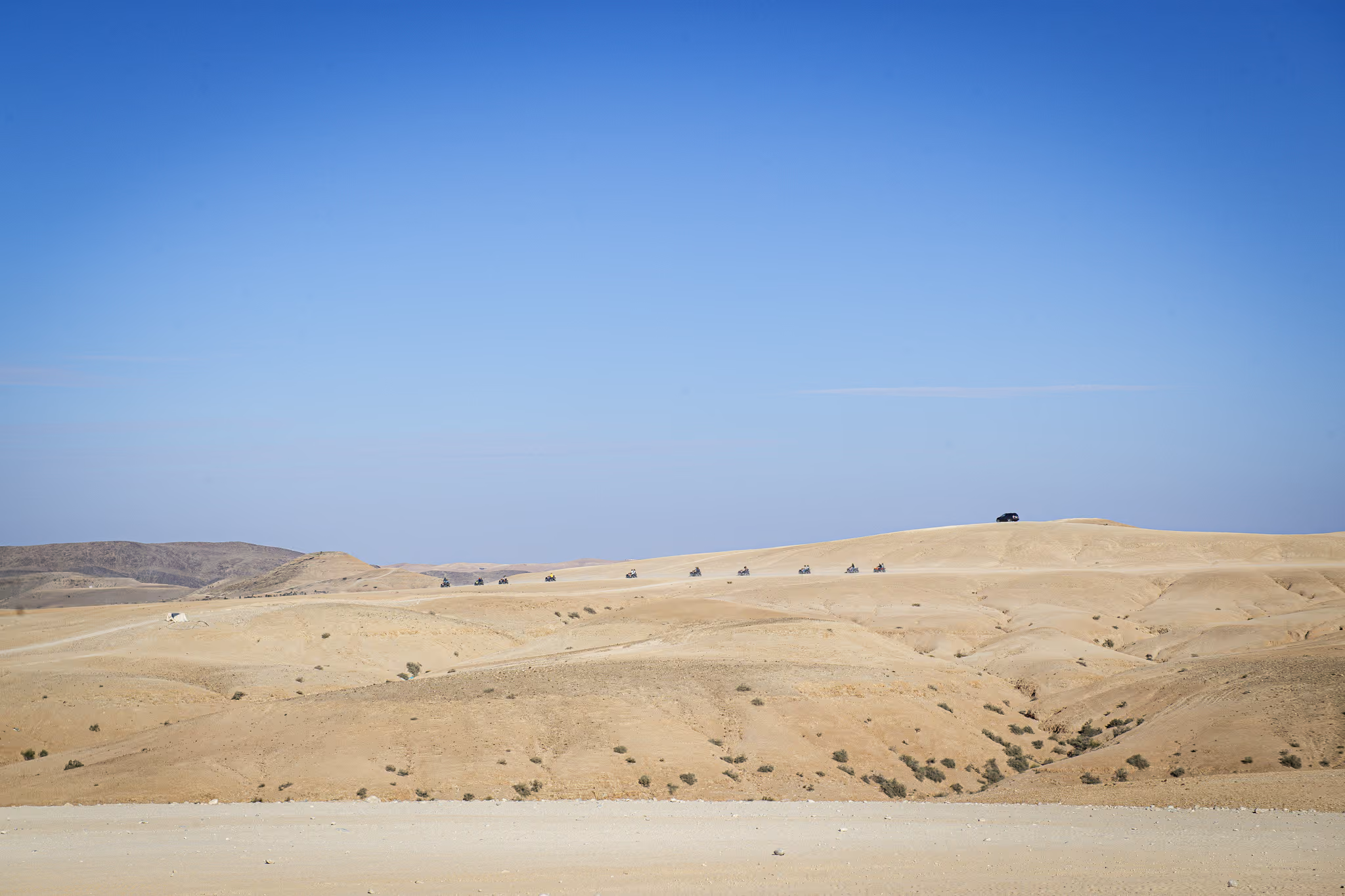
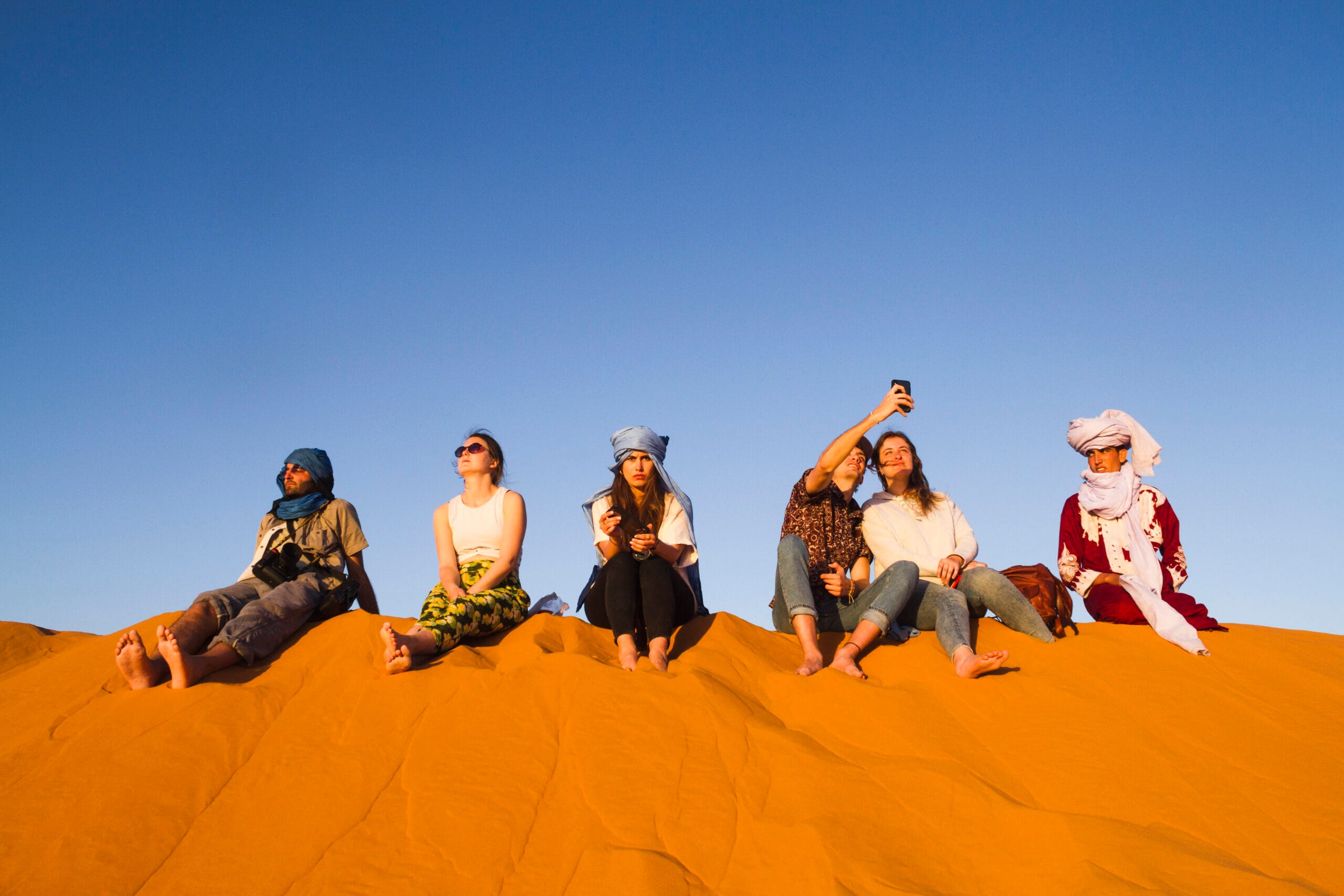
A Marrakech desert camp is one of those travel experiences that sounds slightly exotic in the planning stage and becomes completely unforgettable once you’re actually there.
Sitting on cushions under a Berber tent, sipping sweet mint tea as the sun melts into the Atlas Mountains, listening to the silence of the Agafay plateau — there are very few places in the world where you can have this kind of experience and still make it back to a comfortable riad for breakfast the next morning.
But not all desert camps near Marrakech are created equal. The range runs from basic tourist-trap setups with plastic chairs and tinned food to genuinely extraordinary luxury camps with silk tents, gourmet Moroccan cuisine and private terraces. Knowing the difference — and knowing what questions to ask before you book — is what separates a magical evening from a disappointing one.
This complete guide covers everything: the types of camps available, what’s typically included, price ranges for every budget, the best season to go, what to expect on arrival, and the red flags that tell you a camp isn’t worth your time.
| Quick Facts: Marrakech desert camps are located in the Agafay Desert, 30–35 km southwest of Marrakech. Transfer time: 40–50 minutes. Most camps operate evening experiences (arrival ~5:00 PM, departure ~10:00–11:00 PM) but some offer overnight stays. Prices range from 350 MAD (32 €) for a basic dinner to 3,500+ MAD (325 €+) for a luxury overnight per person. |
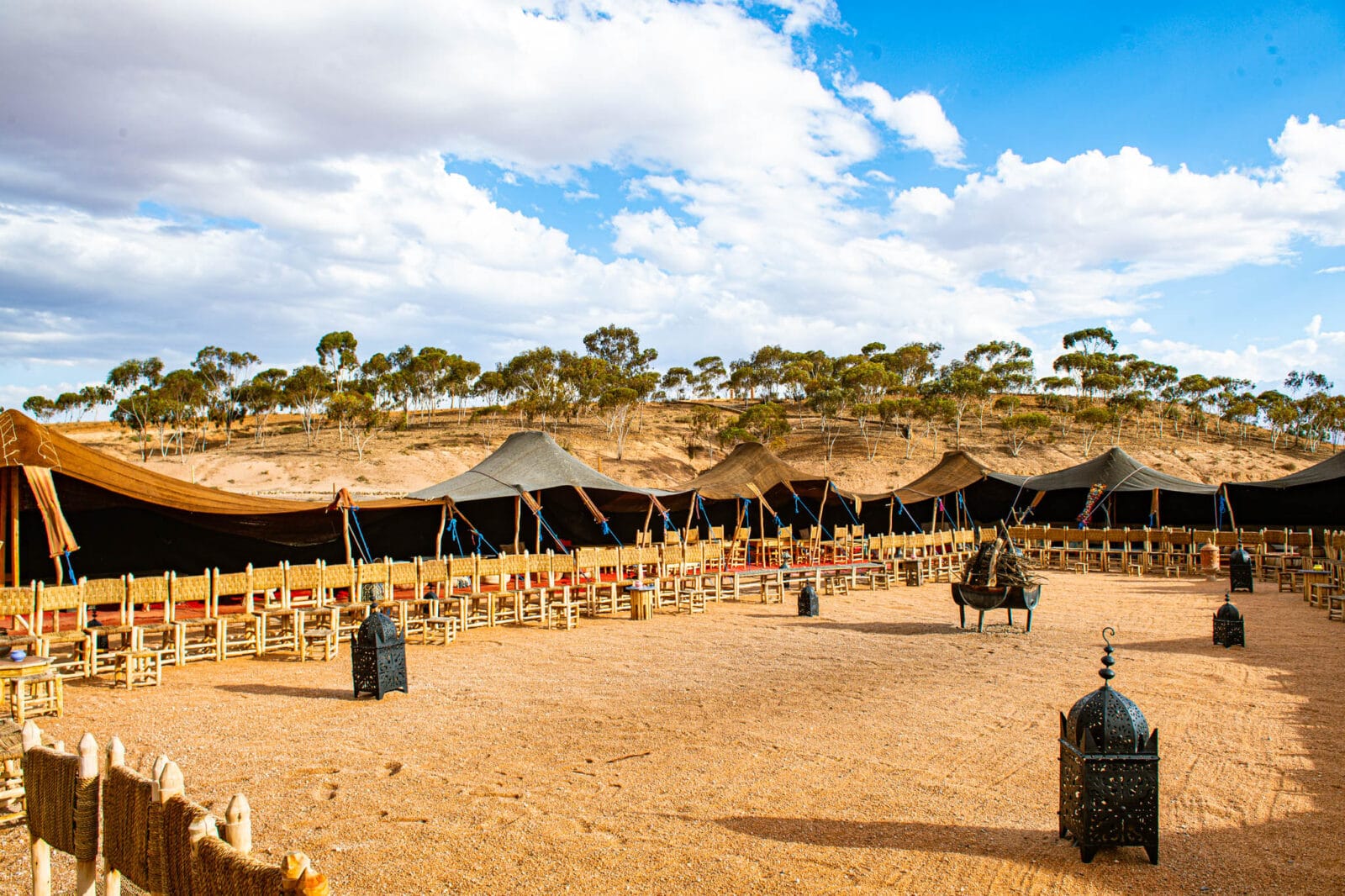
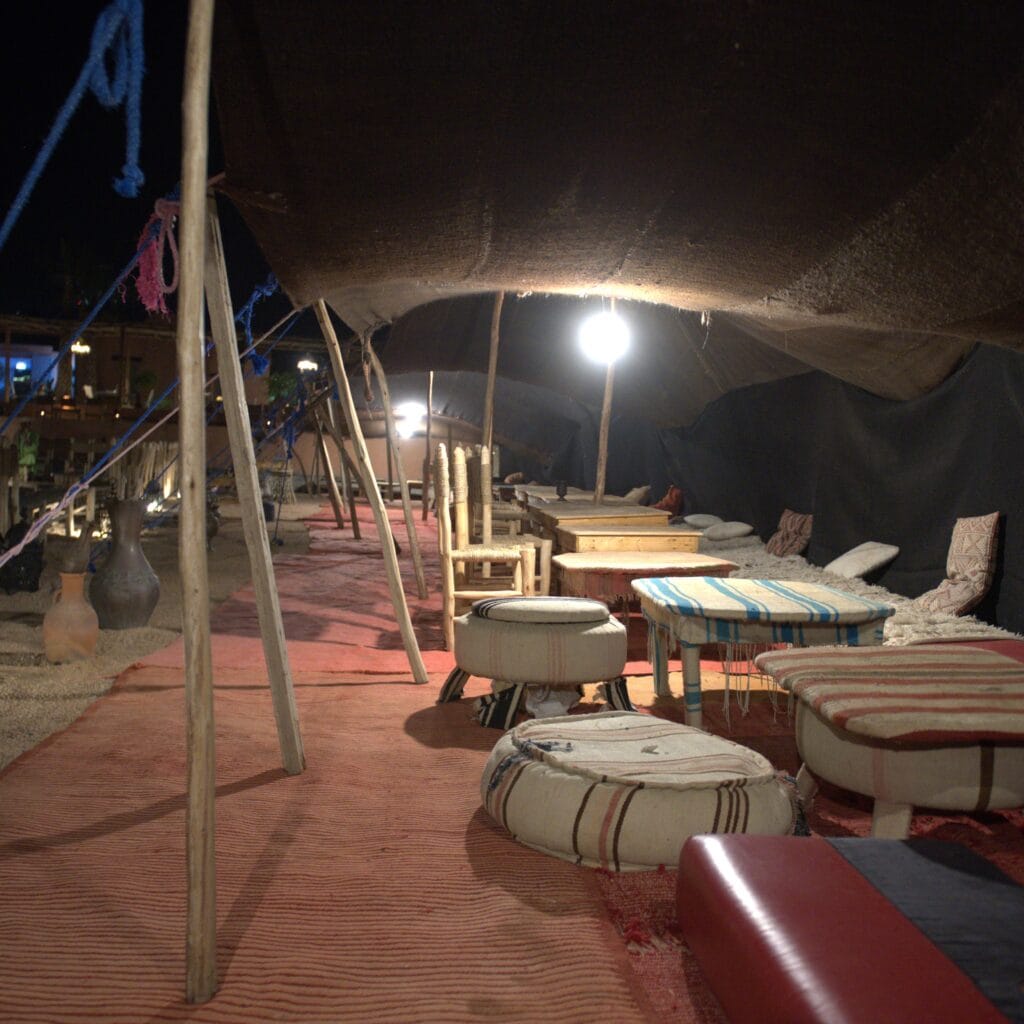
The overwhelming majority of Marrakech desert camp visitors choose the evening dinner experience. You arrive in late afternoon, watch the sunset, participate in optional activities (camel ride, quad biking, henna), sit down to a traditional Moroccan dinner in a large Berber tent, enjoy live music and entertainment, then transfer back to Marrakech by 10:00 or 11:00 PM.
This format works brilliantly for travelers who want the full desert atmosphere without giving up a night in their Marrakech accommodation. It’s also the most flexible option — you can combine it with other activities earlier in the day.
Some Marrakech desert camps offer overnight stays in traditional Berber tents or upgraded private lodges. This option is particularly popular with honeymooners, anniversary celebrations and travelers who want to experience the true magic of a desert night — stargazing until midnight, waking to an Atlas Mountain sunrise, enjoying breakfast in the silence of the morning plateau.
The glamping segment has exploded in the Agafay over the past few years. These camps offer fully furnished luxury tents with real beds (not floor mattresses), private en-suite bathrooms, individual terraces with Atlas Mountain views, gourmet multi-course dinners and attentive hospitality that rivals boutique hotel standards — but in the middle of the desert.
| Camp Type | Duration | Price/Person | Best For |
| Evening dinner camp | 5–6 hours | 500–1,200 MAD | Most travelers, flexible itineraries |
| Standard overnight | 16–18 hours | 1,500–2,500 MAD | Desert immersion, families |
| Luxury overnight | 16–18 hours | 2,500–4,000 MAD | Couples, special occasions |
| Glamping (private tent) | 16–18 hours | 4,000–8,000 MAD | Luxury travelers, honeymoons |
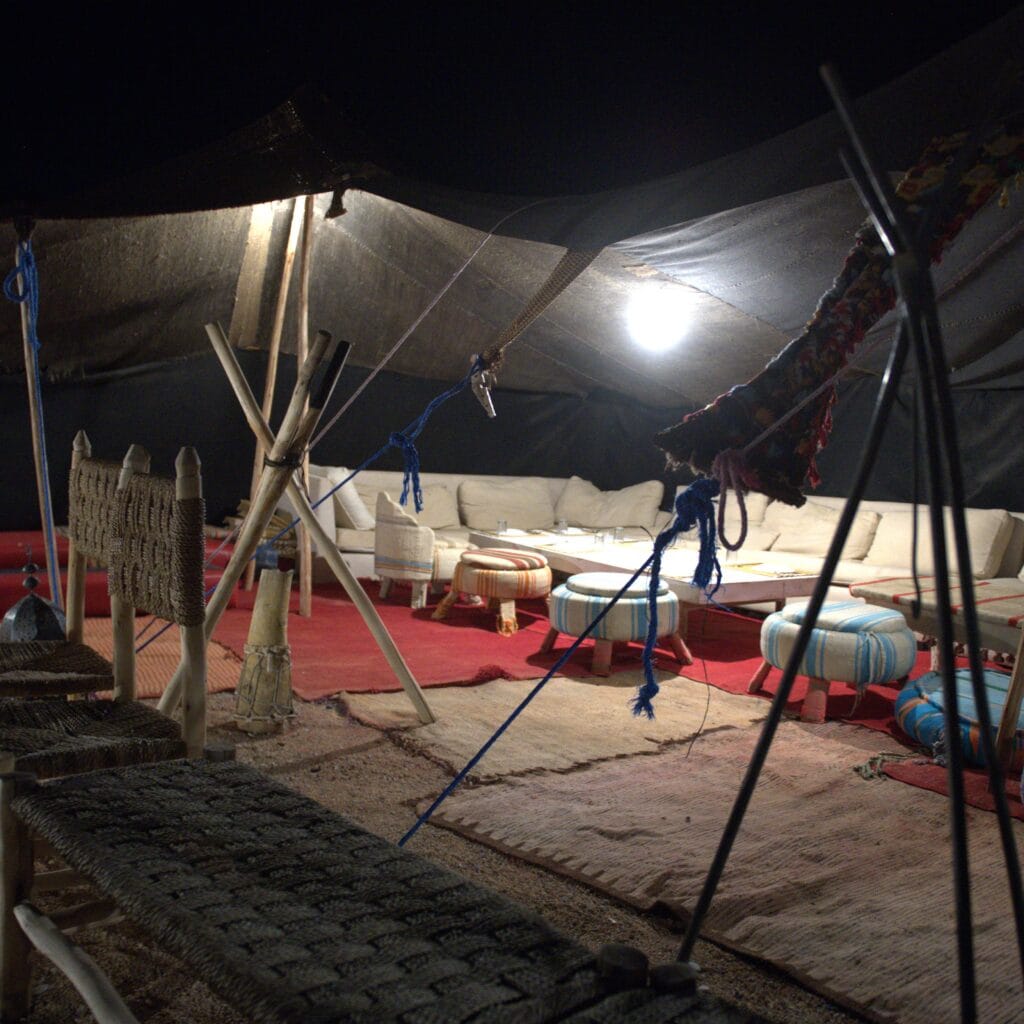
When booking a Marrakech desert camp evening package, a reputable operator should include the following as standard:
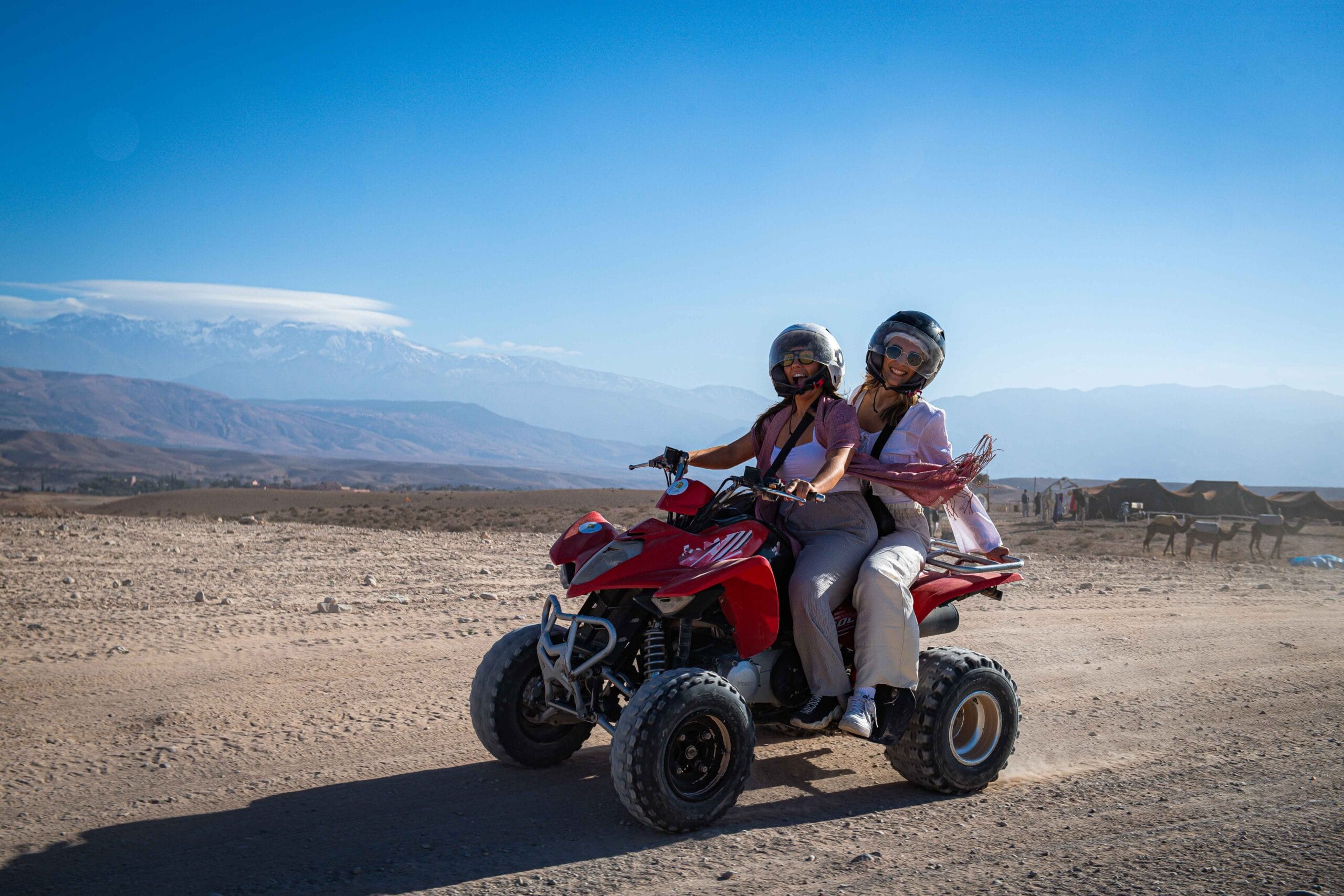
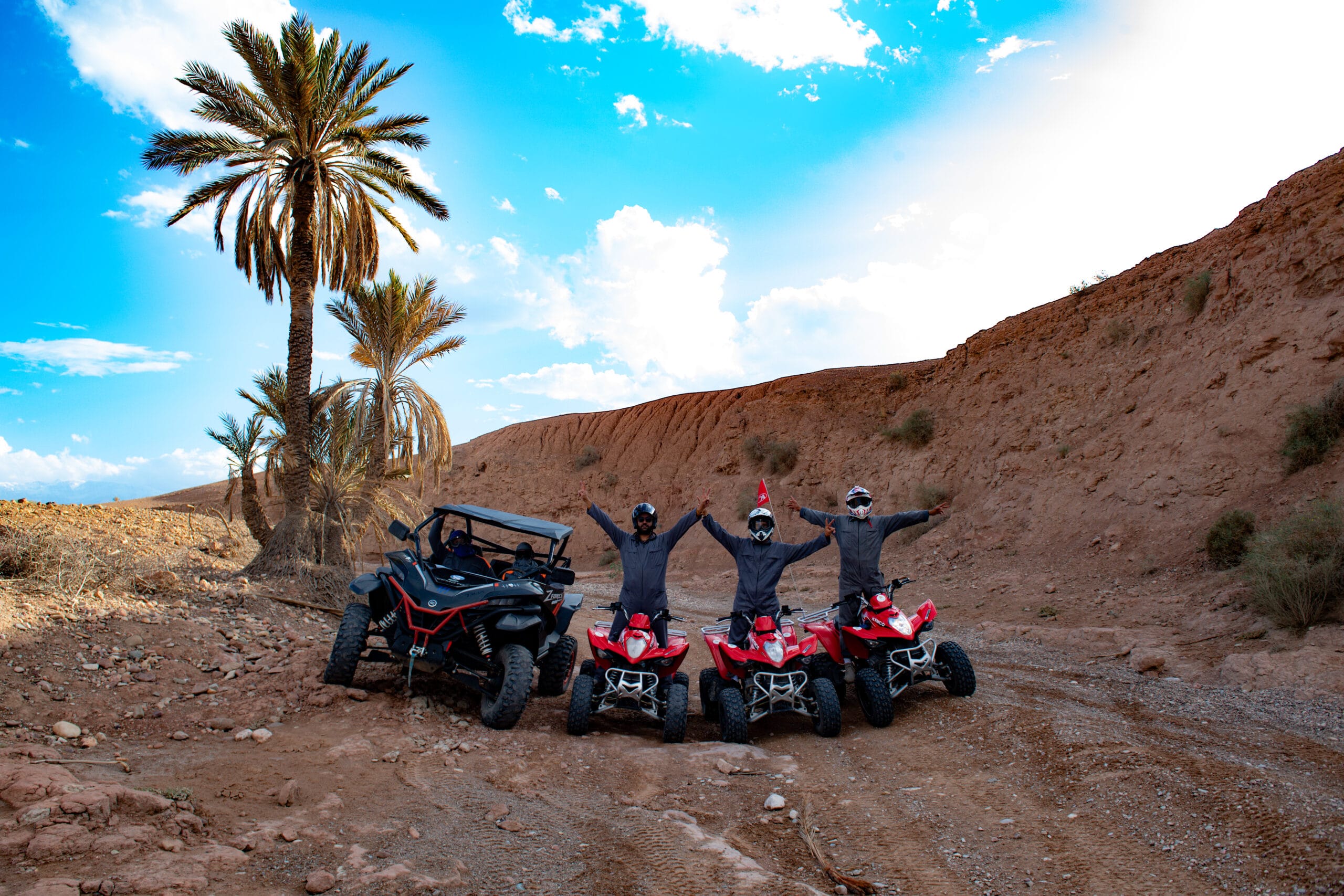
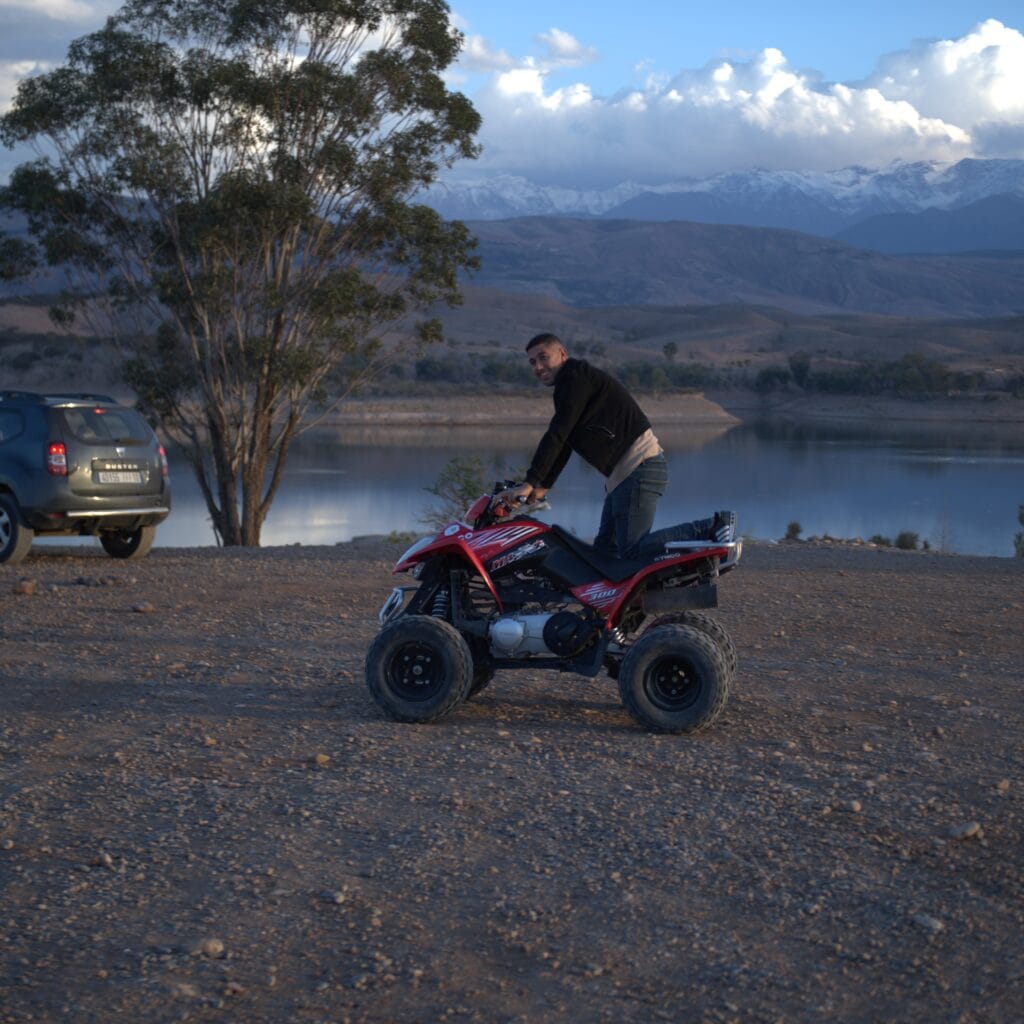
The following activities are rarely included in the base camp price and are typically offered as optional add-ons — either on-site or bundled into a higher-tier package:
| 💡 Pro tip: The best value approach is to book a combo package (activities + dinner) rather than adding extras on-site. Operators consistently offer 20–35% discounts when activities are bundled into the initial booking. On-site add-on prices are always higher than pre-booked prices. |
Your driver arrives at your riad, hotel or a central meeting point. Most operators use comfortable 4×4 vehicles or minivans. The drive takes 40 to 50 minutes through Marrakech’s outskirts, past olive groves and the shimmering Lalla Takerkoust lake, before the road gives way to the pale limestone plateau of the Agafay.
You’re greeted at the camp entrance — often by a Berber guide or the camp manager — with a tray of fresh mint tea and traditional sweets. This is your moment to orient yourself, choose your camel ride or quad departure time, and find a spot on the terrace to photograph the Atlas Mountains as the afternoon light turns golden.
This is the window for active experiences. A 30-minute sunset camel ride departs around 5:45–6:00 PM to time the iconic silhouette photo. Quad biking circuits typically run 60 minutes. Most camps coordinate multiple activity groups smoothly — you won’t feel rushed. If you’ve booked a combo, the timing is managed for you.
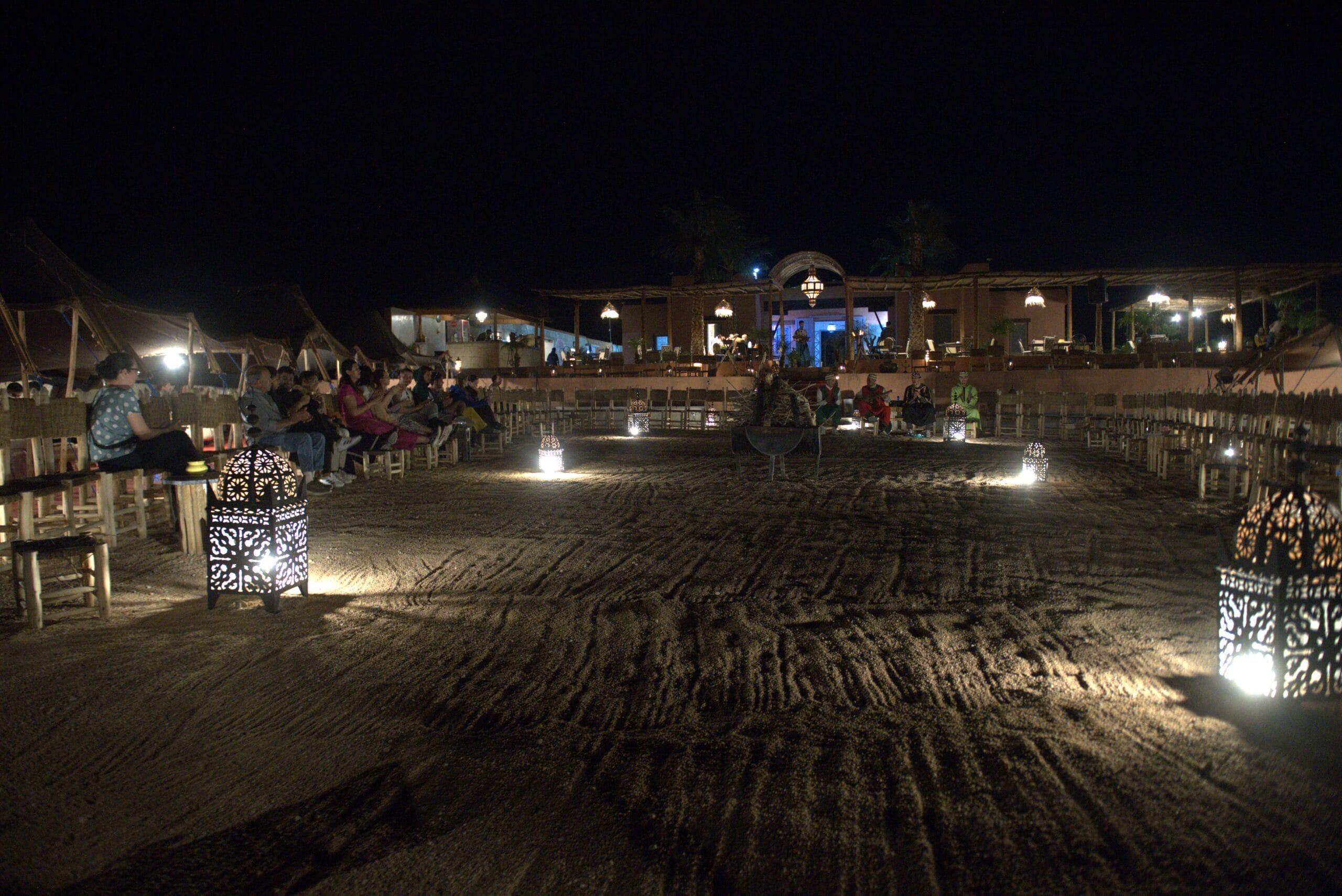
As the sun drops toward the horizon, the camp atmosphere transforms. Lanterns are lit. Musicians begin playing. Cushions are fluffed, tables set. The temperature drops noticeably — this is when you’ll be grateful for that jacket you brought. The sunset itself, framed by the Atlas Mountains, is typically 20 to 30 minutes of extraordinary natural spectacle.
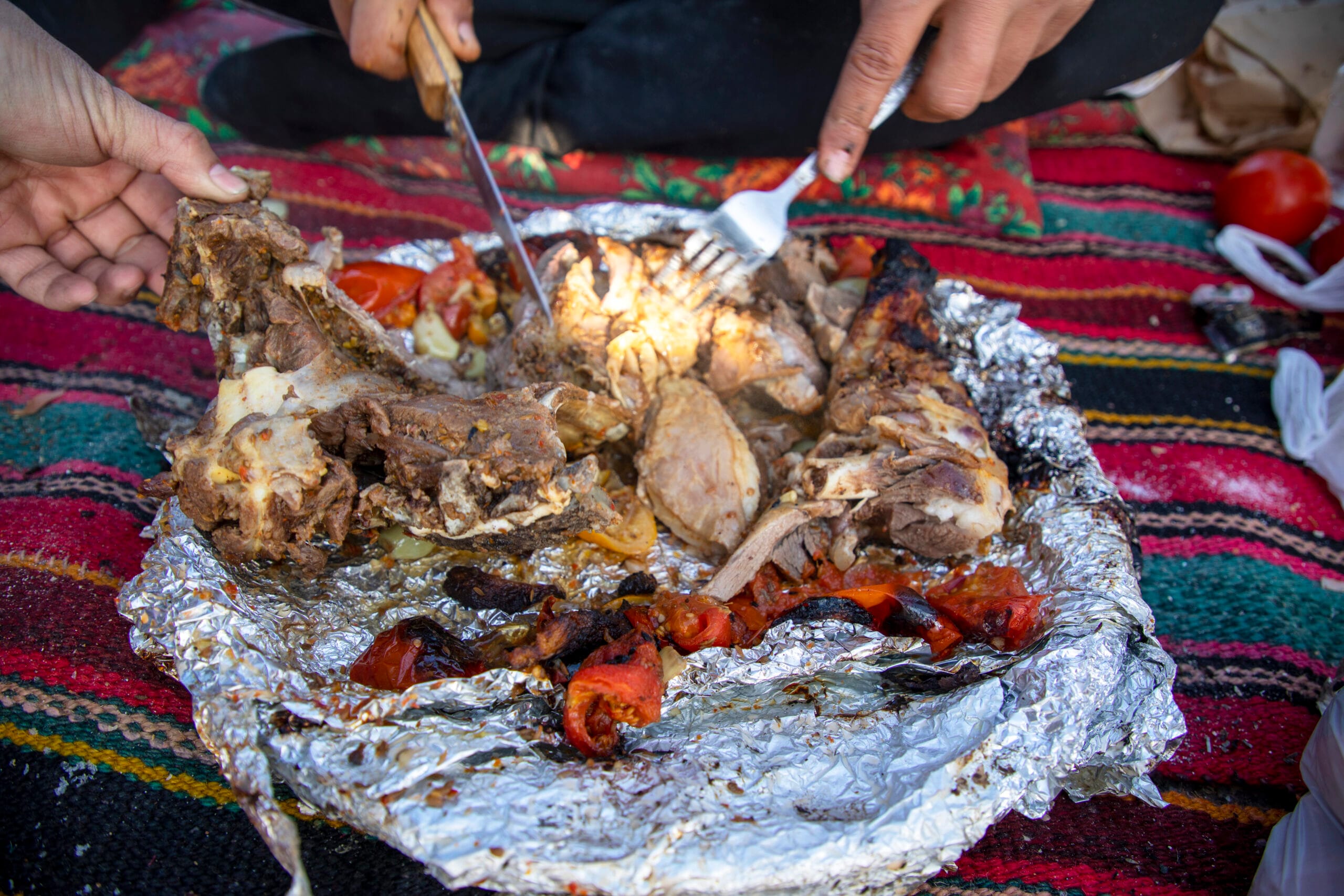
Dinner is served inside the large communal tent or, in smaller luxury camps, at individual private tables. A typical traditional spread includes: assorted Moroccan salads (zaalouk, taktouka, carrot, beetroot), a choice of slow-cooked tajine (chicken with preserved lemon and olives, lamb with prunes and almonds, or vegetable options), bread, couscous on Fridays, seasonal fruit and honey-soaked pastilla for dessert. Portions are generous.
As dinner winds down, the entertainment reaches its peak. In most mid-range and luxury camps, this involves live gnawa music (the hypnotic, percussive Moroccan spiritual music tradition), Berber folk songs, traditional dance performances, and sometimes acrobatics or fire shows. The atmosphere is warm, communal and genuinely festive — this is not a sanitized tourist performance but an authentic cultural moment.
After entertainment, the camp settles into a quieter, more contemplative mood. This is the stargazing hour. In the Agafay’s low light pollution, the Milky Way is visible from September to May. If the camp offers a guided astronomy session, this is when it happens. Most guests find themselves reluctant to leave.
Your driver collects your group for the return journey. You’re typically back at your Marrakech accommodation by 11:00–11:30 PM — in time for a nightcap or an early rest before tomorrow’s medina exploration.
Most camp packages include transfer from central Marrakech (near Jemaa el-Fna or Gueliz). If your riad is in the medina’s deeper alleys, ask whether door-to-door pickup is included or whether you need to walk to a meeting point. Some cheaper packages drop you at a collection point rather than at your door.
A camp hosting 15 guests creates a totally different atmosphere from one hosting 150. Ask the operator about typical group sizes on the night you’re visiting. Large group tours can feel impersonal and rushed; smaller groups create more genuine connections and a quieter, more magical atmosphere.
Moroccan cuisine is naturally vegetarian-friendly and heavily fish and chicken-based, but confirmation is always wise for vegetarians, vegans, or guests with allergies. Ask specifically about gluten-free options if relevant — traditional couscous and pastilla contain wheat. Good camps will accommodate dietary needs with advance notice; poor ones will simply shrug.
This sounds mundane but it significantly affects the experience. Glamping camps have private en-suite bathrooms. Mid-range camps have clean shared toilet blocks. Basic camps may have very rudimentary facilities. If sanitation standards matter to you (and they should), ask directly before booking.
The Agafay rarely sees rain (fewer than 200mm annually), but it does happen, particularly between December and February. Ask whether the camp has covered tent dining and whether activities are modified in wet weather. Reputable camps will offer a partial refund or reschedule if severe weather makes the experience impossible.
Some camps or combo packages require a minimum of 2, 4, or 6 people to operate. Solo travelers should confirm this upfront — some operators are delighted to add a solo traveler to an existing group, others will charge a solo supplement.
If you’re booking for young children, ask about the entertainment schedule — fire shows and louder gnawa music typically run from 8:30 PM to 10:00 PM. Some families prefer to arrive later and leave before the entertainment peaks, especially with children under 7.
Birthdays, anniversaries, honeymoons and proposals are very common at Marrakech desert camps. Most quality operators can arrange special table setups, personalized decorations, rose petal arrangements, custom cake or a private fire pit with champagne. Ask early — these extras need preparation time.
| Month | Temperature Range | Special Conditions | Experience Rating |
| January | 8–18°C | Snow on Atlas, cold nights | ⭐⭐⭐⭐ Beautiful but dress warm |
| February | 10–20°C | Almond blossom nearby | ⭐⭐⭐⭐ Excellent |
| March | 14–24°C | Perfect spring weather | ⭐⭐⭐⭐⭐ Best month |
| April | 16–27°C | Peak season, busy | ⭐⭐⭐⭐⭐ Best |
| May | 18–30°C | Warm days, cool nights | ⭐⭐⭐⭐⭐ Excellent |
| June | 24–38°C | Hot afternoons | ⭐⭐⭐ Sunset only |
| July | 26–42°C | Very hot, dust haze | ⭐⭐ Evening only |
| August | 26–40°C | Hot, some haze | ⭐⭐ Evening only |
| September | 22–34°C | Cooling down | ⭐⭐⭐⭐ Good |
| October | 18–28°C | Ideal conditions return | ⭐⭐⭐⭐⭐ Best |
| November | 14–22°C | Clear skies, cool evenings | ⭐⭐⭐⭐⭐ Excellent |
| December | 10–18°C | Atlas snow visible | ⭐⭐⭐⭐ Very good |
| Key insight: The single most important factor for a memorable Marrakech desert camp experience is clear skies. November through April offers the highest probability of crisp, clear evenings with unobstructed Atlas Mountain views and the best stargazing. If you’re visiting in summer, your experience will still be beautiful — but plan activities for late afternoon and evening only. |
A camp that refuses to confirm how many guests will be present on your evening is usually hiding that it operates industrial-scale group tours. Fifty people crammed into one tent, with a single speaker playing recorded music, is a world away from what the photos suggested. Always ask specifically.
Agafay desert camps are heavily marketed on Instagram with stunning photography — often shot at dawn on completely empty sets, with professional models and perfect lighting. The actual camp may be much more modest. Reverse-image search the camp photos and check recent TripAdvisor or Google Reviews specifically filtering for reviews from the last 6 months.
A “desert camp dinner + activities” package for 200–250 MAD per person should raise immediate questions. At this price point, something significant is missing — either the transfer is not included, the dinner is minimal, the activities are token (10-minute camel walk on a rope), or the camp is very far from the claimed location and involves an additional private transfer charge on arrival.
A quality camp operator answers emails and messages promptly and specifically. If the operator’s response to “What is included in the dinner?” is simply “Traditional Moroccan food — very good!” without details, treat that as a warning sign. Professional operators are proud of their offering and happy to describe it precisely.
Legitimate operators have a clear cancellation policy — typically full refund 48–72 hours before, partial refund within 24 hours. An operator who takes payment with no cancellation policy and becomes difficult to reach afterward is a significant risk, especially during peak season when dates are fully booked and alternatives are limited.
A night (or even an evening) at a Marrakech desert camp in the Agafay is one of those travel experiences that rewires your sense of what’s possible in a short trip. The combination of landscape, food, music, night sky and Moroccan hospitality creates something that no single element could produce alone — and it sits just 45 minutes from one of the world’s great cities.
The difference between a forgettable camp experience and an extraordinary one comes down entirely to preparation: choosing the right camp type, asking the right questions, arriving at the right time, and setting realistic expectations about what you’re getting — a raw, beautiful, atmospheric desert evening, not a five-star hotel transplanted into the wilderness.
What to remember before you book:
Ready to book your Agafay desert camp experience? Explore our range of evening packages, overnight stays and complete combo adventures — all with door-to-door transfer from your Marrakech accommodation.
Without question — a well-chosen Marrakech desert camp is consistently rated as one of the top travel experiences in all of Morocco. The combination of sunset views, traditional Moroccan dinner, live Berber music and night sky stargazing creates an atmosphere that no medina restaurant or riad rooftop can replicate. The key is choosing the right camp for your budget and expectations, which is why doing your research — as you’re doing now — makes such a difference.
All reputable Marrakech desert camps are located in the Agafay Desert, approximately 30 to 35 kilometers southwest of Marrakech city center. The transfer takes 40 to 50 minutes by car or organized minivan. This short distance is one of the Agafay’s great advantages — you can experience the full desert atmosphere and still return to your Marrakech accommodation the same evening.
The standard dinner at a Marrakech desert camp is a traditional multi-course Moroccan meal. This typically begins with a spread of cold salads (zaalouk, taktouka, Moroccan carrot, beetroot), followed by a slow-cooked tajine (chicken, lamb, or vegetable options) served with Moroccan bread and harissa, and finished with fresh fruit, Moroccan pastries and endless mint tea. Higher-end camps offer expanded menus including couscous, bastilla (savory-sweet pigeon or chicken pastry), and sophisticated desserts.
Yes — several camps near Marrakech offer overnight accommodation ranging from standard Berber tent sleeping (floor mattresses, shared facilities) to fully equipped luxury glamping tents with real beds, private bathrooms and private terraces. Overnight packages typically include dinner, breakfast, and often a sunrise activity. Prices range from 1,500 MAD (140 €) for a standard overnight per person to 8,000+ MAD (740 €+) per couple for premium glamping.
Wear comfortable, casual clothing. For evening camps, light layers work well — you’ll be warm during sunset activities but the temperature drops significantly after dark, sometimes by 15 to 20°C. Bring a light jacket or warm pashmina regardless of the season or daytime temperature. Closed-toe shoes are recommended if you plan to participate in quad biking or walking activities on rocky terrain. Avoid formal clothing — the camp atmosphere is relaxed and cushion-based dining is involved.