No products in the basket.

 Zakaria Belkhay
July 3, 2026
Zakaria Belkhay
July 3, 2026
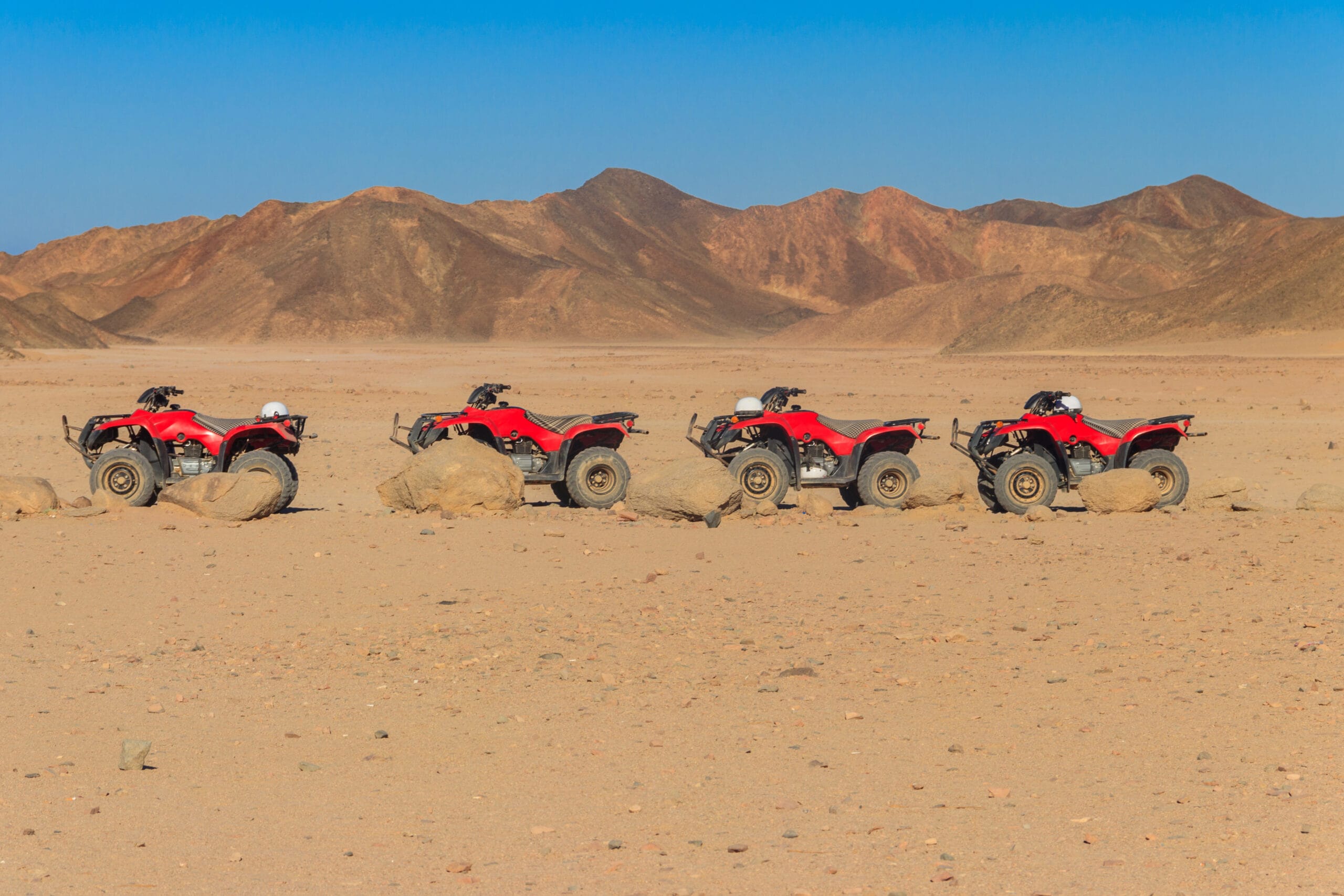
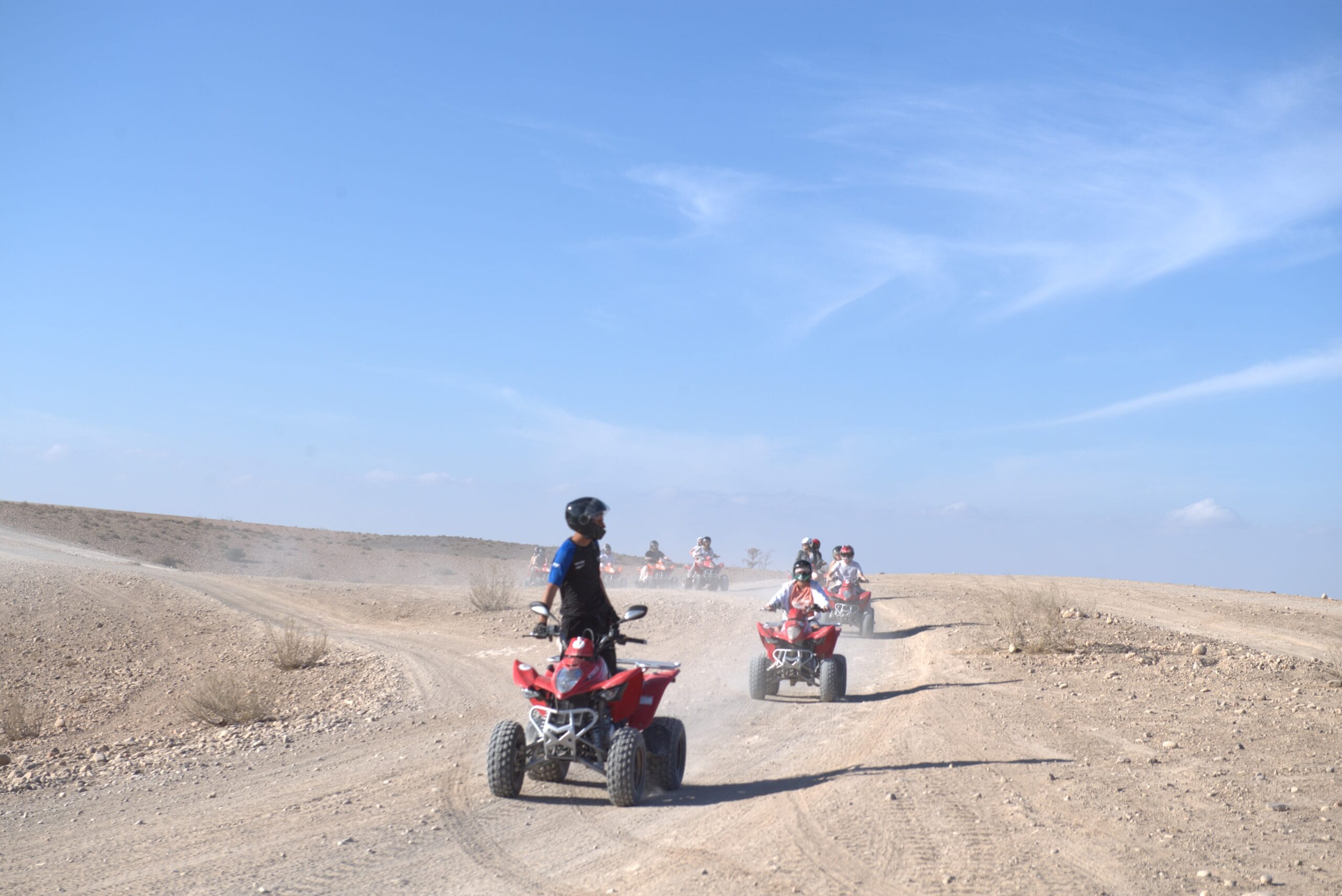
Forty kilometres south of Marrakech, the Agafay plateau opens up like a different planet. No palm trees, no souks, no mopeds — just compressed earth tracks, rocky ridgelines, and wide open sky. It is the kind of place that makes you want to go fast.
The off-road combo offered by Quad Marrakech pairs two distinct machines and two distinct moods into a single day: a buggy ride in the morning, when the light is low and the air still cool, and a quad session in the afternoon, when the plateau heats up and the Atlas glows amber on the horizon. Together, they cover a combined 60 to 80 kilometres of Agafay terrain — far more ground than either activity covers alone.
But beyond the raw numbers, there is a logic to the pairing that goes deeper than convenience. Different vehicles, different postures, different relationships with the landscape. The buggy puts you side by side with someone; the quad puts you alone with the track.
Below, ten reasons why this combo works — practically, experientially, and for almost every type of traveller.
Riding the same terrain twice sounds redundant until you actually do it. A buggy and a quad are fundamentally different machines, and Agafay responds to each of them differently.
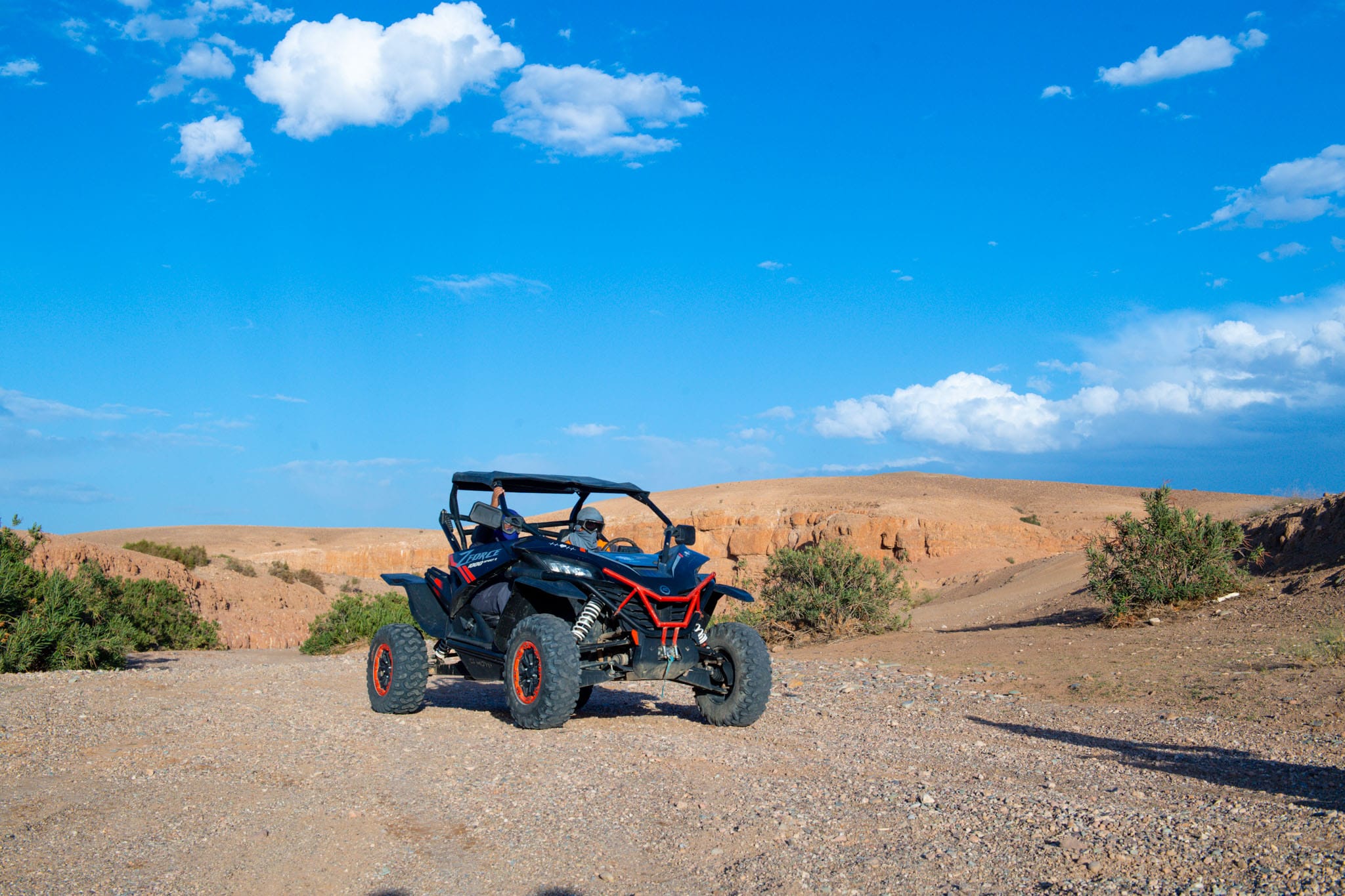
The buggy — typically a side-by-side 1000cc vehicle — is wide, low-slung, and built for two. It handles the rocky plateau with authority, smoothing out washboard tracks through its suspension and letting you carry speed through corners that would throw a quad rider wide. You sit inside a roll cage, shoulder to shoulder with your companion, and the communication between you is instant. Point, laugh, brake together.
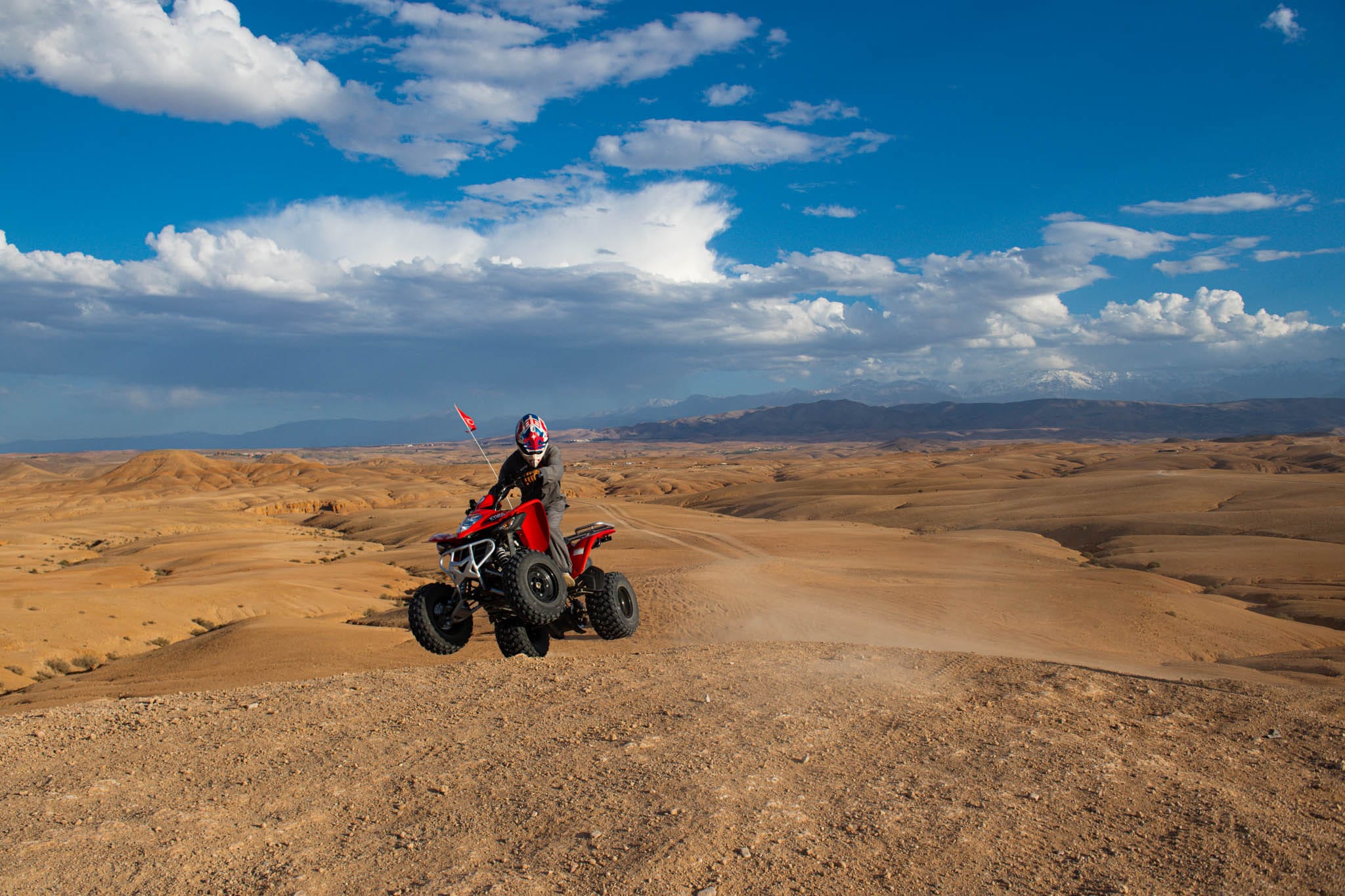
The quad, by contrast, is a solo proposition. You sit higher, feel the surface more acutely through the handlebars, and make your own decisions about line and pace. The same rocky ridge that felt manageable in the buggy now demands your full attention. That shift in responsibility changes everything about how you experience the terrain.
Agafay itself is layered — stone tracks near the edges of the plateau, sandy river-bed crossings near the oued, and open compacted earth in between. The buggy tends to devour the open sections; the quad excels on the tighter, more technical lines. Doing both means the landscape never gets repetitive, even if parts of the route overlap.
The practical upshot: by the end of the day, you will have experienced Agafay at two different speeds, from two different heights, with two completely different sensory profiles. That is not just double the content — it is double the understanding of where you actually are.
Tip : If you are travelling with a partner, take turns navigating during the buggy session. The passenger seat gives you a completely different read of the terrain — and better camera angles on the straights.
The sequencing of the combo is not arbitrary. Starting with the buggy in the morning and finishing with the quad in the afternoon is a deliberate editorial decision — one that respects both the terrain and the light.
In the early morning, the Agafay plateau sits in the shadow of the High Atlas. The air temperature between 8am and 11am is typically 8 to 12 degrees cooler than the afternoon peak, which matters enormously when you are generating your own body heat behind a steering wheel. The buggy, being an enclosed cockpit experience, traps warmth efficiently — which makes it the natural morning vehicle.
The light at that hour is also worth planning around. Low-angle sun picks out the texture of the rocky plateau in ways that flat midday light simply cannot. Shadows stretch long across the tracks, ridgelines catch gold on one side and deep ochre on the other, and the snow-capped Atlas peaks — visible on clear days from late autumn through spring — glow with unusual clarity.
Guides who have worked Agafay for years consistently describe the morning as the time when the landscape feels most alive. Shepherds move their flocks across the plateau, the air carries the smell of thyme from the scrubland, and the absence of tourist traffic means the tracks are still yours.
By starting the off-road combo at this hour, the buggy session also serves as a warm-up — literally and figuratively. You are reading the terrain, calibrating your confidence with the vehicle, and building appetite for the afternoon’s solo quad experience. The structure creates a natural arc across the day.
Tip : Book the combo for a departure between 8am and 9am for the best light. From November to March, bring a light jacket for the buggy session — even desert mornings get cold when you are moving at 60 km/h.
Agafay is often described as a stone desert, which is accurate but incomplete. The plateau is geologically diverse — compressed limestone in some zones, sandy alluvial beds in others, with abrupt drops into dried riverbeds and long flat stretches of open track that invite speed. This variety is one of the core reasons it works so well as an off-road destination.
Unlike the Saharan ergs further south, Agafay has no soft dunes to get bogged in. The ground is generally firm and predictable underfoot, which means guides can maintain a reliable pace regardless of season or recent rainfall. The plateau also sits at approximately 600 to 700 metres above sea level — high enough to feel removed from the city, low enough to avoid the altitude complications of a mountain circuit.
The tracks themselves cover a range of technical difficulty. Wide, compacted main routes allow beginner-level drivers to build confidence early in the session. Narrower lateral tracks cut between rocky outcrops and drop into shallow wadis — these are where more experienced riders can push harder under guide supervision. The Quad Marrakech route covers roughly 30 to 40 kilometres per session, meaning neither the morning buggy nor the afternoon quad feels rushed.
There is also a human geography to the terrain worth noting. The plateau is dotted with small Berber settlements and the occasional luxury desert camp. Routes are designed to pass through or alongside these without disturbing daily life — giving riders a genuine sense of the landscape as lived-in rather than purely recreational. That context adds texture to what could otherwise feel like a simple speed circuit.
Tip : If you visit after rainfall, the plateau’s clay sections can become slippery. The off-road combo is fully guided, and your instructor will adapt the route in real time — but it is worth asking about conditions when you book.
The Agafay off-road combo has become one of the more quietly popular choices for couples visiting Marrakech — not because it is romantic in the conventional sense, but because it solves a specific problem: finding an activity that is genuinely shared rather than passively observed together.
The buggy is the obvious couple’s machine. Side-by-side seating, a shared cockpit, and the collective decision-making of navigating a rocky plateau create a particular kind of bonding dynamic. There is something about piloting a fast vehicle together — or watching your partner pilot it while you grip the roll bar — that produces conversation that would not happen over a restaurant table.
The afternoon quad session then introduces healthy competition. Each rider on their own machine, following the guide in convoy, but with full autonomy over pace and line. Couples who have done the combo often describe the quad session as the moment where they each had their own private experience of the same place — and then compared notes over dinner.
Practically speaking, the combo also fits naturally into a full day trip from Marrakech. Transfer time from the city centre is approximately 45 minutes. With a lunch break built into the midday window — many operators include a traditional Moroccan meal at a desert camp between the two sessions — the day has a satisfying rhythm: arrive, go fast, eat well, go fast again, return to the medina by early evening.
For couples celebrating a birthday, anniversary, or simply wanting a day that does not involve another museum queue, the off-road combo delivers an experience with a clear beginning, middle, and end — and a story worth telling.
Tip : During the buggy session, take turns in the driver’s seat at least once, even if one person is less confident. The guide will adjust pace accordingly, and the role reversal tends to be a highlight of the day.
One of the most common questions families ask before booking the off-road combo is straightforward: who can actually get on these vehicles? The answer is more inclusive than most people expect, but it comes with clear parameters worth understanding.
For the buggy, children can ride as passengers from around age 5, provided they can sit securely with a seatbelt and are comfortable with noise and movement. Adults must hold a valid driving licence to take the wheel. The side-by-side design means a parent can drive while a child rides alongside — which is one reason the buggy is often the preferred starting point for families.
The quad session has a slightly higher entry threshold. Solo riders are generally required to be at least 16 years old and hold a licence or demonstrate prior experience. Children between approximately 7 and 15 can ride pillion with an adult, depending on the operator’s current policy and the child’s size and comfort level. It is always worth confirming the exact age and weight parameters when booking, as these can vary by season and vehicle specification.
Safety equipment is provided for both sessions: helmets, gloves, and goggles as standard. Guides lead the convoy and set the pace — riders follow rather than navigate independently, which removes the pressure of route-finding and keeps the group together. Slower family groups are not held back by more experienced riders; guides routinely split the convoy when pace differences are significant.
For families with mixed age groups — say, teenagers who want speed and younger children who need a slower experience — the combo format allows guides to run two parallel programmes within the same time window. That flexibility is one of the operational advantages of a dedicated off-road centre rather than a single-activity operator.
Tip : If you are bringing children under 10, confirm the exact buggy model being used on your date. Some vehicles have higher ground clearance and a wider cockpit that suits smaller passengers more comfortably.
The midday window between the morning buggy and the afternoon quad is not dead time. When structured well — as it is in the Quad Marrakech full-day combo — it is one of the more memorable parts of the experience.
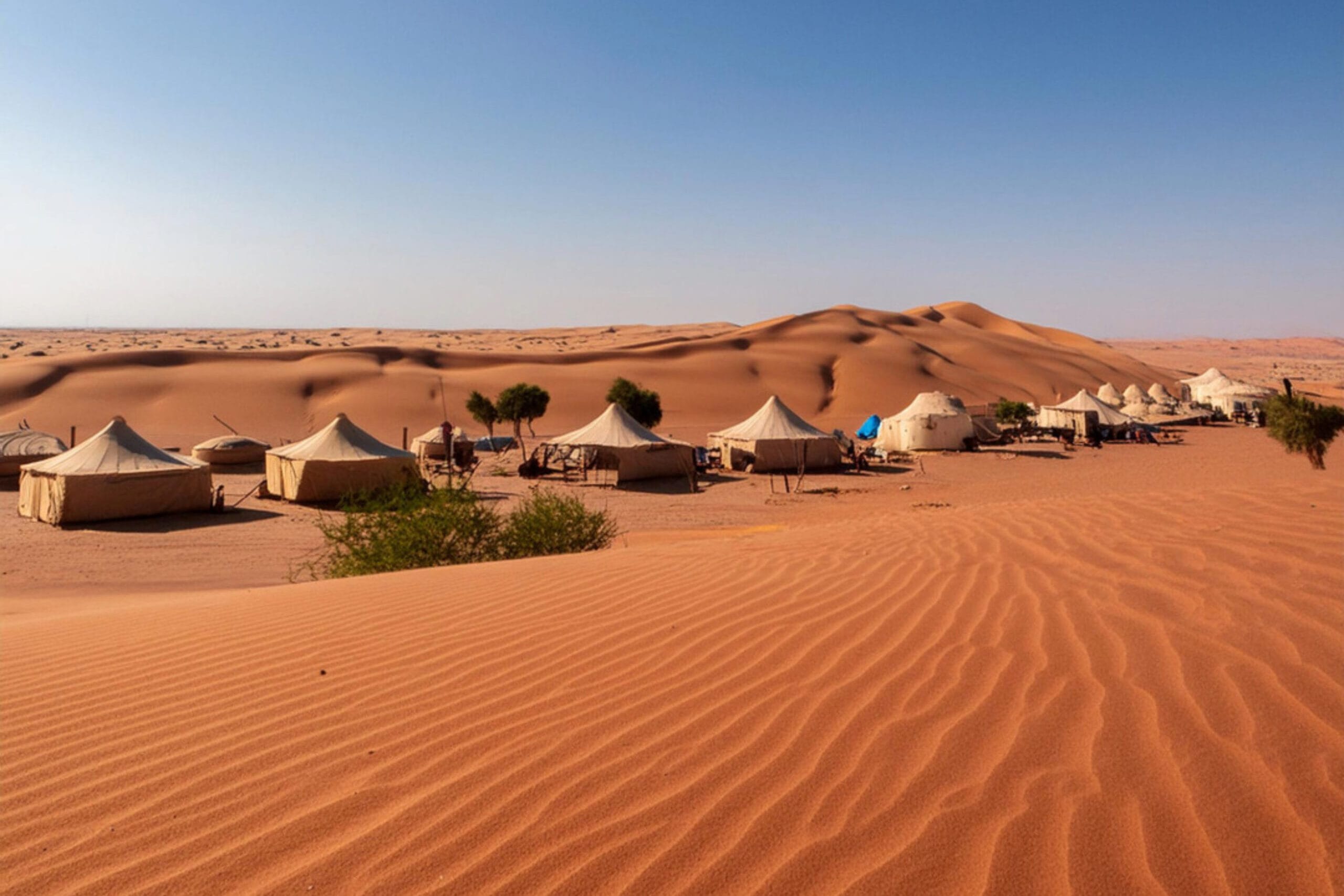
The standard arrangement involves a traditional Moroccan lunch at a desert camp or a riad-style facility on the plateau edge. Menus typically rotate around a tagine with seasonal vegetables, bread baked that morning, and fresh mint tea served with pastries. It is not haute cuisine, but it is genuine — the kind of meal that makes sense in its context, eaten in the shade of a tent or under a pergola looking back at the terrain you just crossed.
The break runs approximately 90 minutes to two hours, which gives the right amount of recovery time without letting the afternoon session feel anticlimactic. Adrenaline fades, appetite rises, and conversation about the morning’s moments — the rocky descent, the moment someone nearly stalled on the dune crossing — fills the table naturally.
This window is also when most people do their photography review. The action shots from the buggy session come through from the guide or onboard camera, and the lunch table becomes a small editing session before the phones go back into the dust-proof bags for the quad session.
For operators who offer a sunset or dinner extension — such as the Agafay desert dinner show that Quad Marrakech runs in the evenings — the lunch break is also a natural moment to decide whether to extend the day. The infrastructure is already there, and the transition from afternoon quad to sunset dinner is seamless when both are organised through the same team.
Tip : Let the kitchen know about dietary requirements at booking rather than on arrival. Most desert camps can accommodate vegetarian, vegan, and gluten-free meals with 24 hours’ notice.
Agafay is a naturally photogenic landscape — wide horizons, dramatic rock formations, and an Atlas backdrop that photographers travel specifically to capture. The off-road combo adds kinetic energy to that canvas, but it also creates a genuine tension: how do you photograph a fast-moving experience without spending the whole day looking through a lens instead of living in the moment?
The short answer is to divide the labour. Use the buggy session primarily as your action photography window. The passenger seat in a side-by-side vehicle is one of the better platforms for capturing moving shots — you are stable enough to compose a frame, close enough to the driver for dynamic angles, and the vehicle’s speed is varied enough that you will get both blurred background and frozen action frames in a single session.
For the quad session, put the camera away and rent or borrow a mount if you want footage. Most guides carry GoPro-style cameras and can mount one to your quad’s handlebars or frame — this gives you first-person perspective without requiring you to hold anything. Action footage from a quad is difficult to capture manually at speed and tends to produce blurry, unusable frames. Let the mount do the work.
The lunch window and transfer moments are where portrait and landscape photography fit most naturally. The plateau light at midday is harsh, but the shadows inside tent structures and the texture of traditional camp architecture photograph well in flat light. Early morning arrival and the last 45 minutes before sunset (if you stay for a dinner extension) are the golden hours for landscape work.
One practical note: Agafay is dusty. Protect your phone or camera with a case during the riding sessions, and carry a microfibre cloth for lens cleaning. Dust in this environment is fine-grained and gets into everything.
Tip : Ask your guide to do one slow lap at the beginning of the quad session before the main route begins. This gives you a chance to frame the landscape and take still shots from the seat without pressure.
Comparing prices across Marrakech off-road operators can feel confusing, partly because what is included in a quoted price varies enormously. Understanding the actual value of an off-road combo requires unpacking what the number covers.
A well-structured full-day combo at Quad Marrakech typically includes: hotel transfer from Marrakech centre, safety equipment for both sessions (helmet, gloves, goggles), a guided buggy circuit of 30 to 40 kilometres, a traditional Moroccan lunch at a desert camp, and a guided quad circuit of a similar distance in the afternoon. The guide is included throughout — you are never left to navigate independently unless you specifically request a more autonomous format.
What is usually not included: personal travel insurance, photographs (beyond guide-captured images), alcoholic beverages at lunch, and any optional extensions such as a camel trek or dinner show. These are worth adding intentionally rather than by default.
When you break down the combo price against booking each activity separately — a standalone buggy half-day plus a standalone quad half-day, each with its own transfer — the combo consistently works out 20 to 30 percent cheaper in total. The shared transfer alone accounts for a significant part of that saving.
The more important value question, though, is not financial. It is whether the full-day format allows the sessions to breathe. A rushed 1.5-hour quad following a rushed 1.5-hour buggy, with no recovery time in between, is a different experience from a properly paced day with genuine downtime. The lunch break and the extended afternoon session are where the value actually lives — not just in the headline kilometre count.
Tip : If you are a group of four or more, ask about group pricing. Most operators offer a meaningful discount at that threshold, and you will also likely get a dedicated guide rather than sharing with other groups.
Agafay is a year-round destination, but that does not mean every month delivers the same experience. The off-road combo works across all four seasons with some important nuances worth understanding before you book.
October through April is widely considered the optimal window. Temperatures on the plateau range from 15 to 28 degrees Celsius during the day, the Atlas peaks are snow-capped from December onwards (providing a dramatic backdrop), and rainfall is infrequent enough not to disrupt operations but sufficient to keep the vegetation on the plateau edges green. Winter mornings can be genuinely cold — bring layers for the early buggy session — but the midday and afternoon hours are consistently comfortable for outdoor activity.
May and June occupy a middle ground. Temperatures climb toward 35 degrees by afternoon, which affects the quad session more than the buggy (the open cockpit of a quad provides no shade). Early morning departures become increasingly important during this period, and hydration takes on more significance.
July and August are the toughest months for an all-day outdoor combo. Plateau temperatures regularly exceed 40 degrees in the afternoon. Operations continue, but the format shifts — sessions shorten, the lunch break extends, and many operators move the second activity to the late afternoon or early evening to avoid the peak heat window. If you are visiting in high summer, confirm the adapted schedule explicitly when booking.
September is a pleasant shoulder month: post-summer heat, pre-autumn crowds, and a quality of light that is warm without being punishing. It is arguably the most underrated month for the Agafay off-road combo.
Tip : For the most comfortable full-day experience, aim for October, November, March, or April. These months combine ideal temperature, good light, and manageable tourist volume across both the plateau and Marrakech.
The off-road combo ends naturally around 5pm, depending on the start time and the pace of the day. At that point, the Agafay plateau is doing something worth staying for: the light drops low, the Atlas turns violet, and the temperature falls to something genuinely comfortable after a day in the heat. Leaving at this exact moment is, to put it plainly, a waste of position.
Quad Marrakech runs an Agafay desert dinner show in the evenings — a programme that combines traditional Moroccan dinner, live music, and folkloric performance in a desert camp setting. For riders finishing the afternoon quad session already on the plateau, the transition into the dinner experience requires no additional transfer. You shower at the camp facilities, change out of your riding gear, and walk into a completely different register of the same day.
The juxtaposition is part of the appeal. A morning of speed and dust followed by an evening of tagine, candlelight, and gnawa percussion is not a contradiction — it is a full portrait of what Agafay can hold. The plateau that felt raw and kinetic at 80 km/h feels intimate and theatrical by firelight.
For travellers who only have one day outside Marrakech, this extended format — off-road combo plus dinner show — compresses a remarkable range of experience into a single outing. It is particularly effective for groups that include both adventure-seekers and travellers who are less drawn to the riding activities but want an evening that goes beyond the medina.
Booking the extension in advance is strongly recommended, especially in high season. Dinner show capacity is limited, and the camp fills independently of the daytime riding programme.
Tip : If you plan to stay for the dinner show, pack a change of clothes in a small bag and leave it at the camp before the morning session. Coming off the afternoon quad covered in dust and transitioning straight to dinner without a refresh is uncomfortable — a quick change makes all the difference.
The Agafay off-road combo is not simply two activities bolted together. It is a day with a shape — a morning build, a midday rest, an afternoon push, and an optional evening that makes leaving feel premature. The plateau rewards the time you give it, and the pairing of buggy and quad gives you two genuinely different windows into the same remarkable landscape.
Whether you are planning a family adventure, a day out with a partner, or a solo detour from the medina’s sensory overload, the off-road combo delivers something specific: the particular satisfaction of having covered real ground, in real terrain, at your own pace. Not a tour bus, not a guided walk, not a curated experience from behind glass — just you, a machine, and 40 kilometres of Agafay in front of you.
Ready to book? The Quad Marrakech team handles transfers, equipment, lunch, and guiding — everything except the decision to go. Make it today.
The combo typically includes hotel transfer from Marrakech, safety equipment for both sessions, a guided buggy circuit of 30 to 40 kilometres in the morning, a traditional Moroccan lunch at a desert camp, and a guided quad circuit of similar distance in the afternoon. Personal insurance and optional extensions are not included.
The full day runs approximately 8 to 9 hours from hotel pickup to return, including transfer time. Riding sessions are roughly 2.5 to 3 hours each, with a 90-minute to 2-hour lunch break between them. The exact schedule depends on your departure time.
Yes, a valid driving licence is required to drive the buggy or ride the quad independently. Passengers can ride in the buggy without a licence. Children and non-licence holders may ride pillion on the quad with an adult, subject to age and weight limits.
October through April offers the most comfortable conditions — mild temperatures, clear skies, and snow-capped Atlas views. July and August are the hardest months due to extreme afternoon heat. September and late spring are pleasant shoulder alternatives.
Yes. Both sessions are fully guided and pace is adapted to the group’s experience level. Beginners start on easier, open tracks before progressing to more technical terrain. No prior off-road experience is required, though comfort with driving is helpful for the buggy session.
Yes. Quad Marrakech runs an Agafay desert dinner show in the evenings that can be added directly after the afternoon quad session. Since you are already on the plateau, no additional transfer is needed. Advance booking is recommended as dinner show capacity is limited.