No products in the basket.

 Zakaria Belkhay
April 11, 2026
Zakaria Belkhay
April 11, 2026
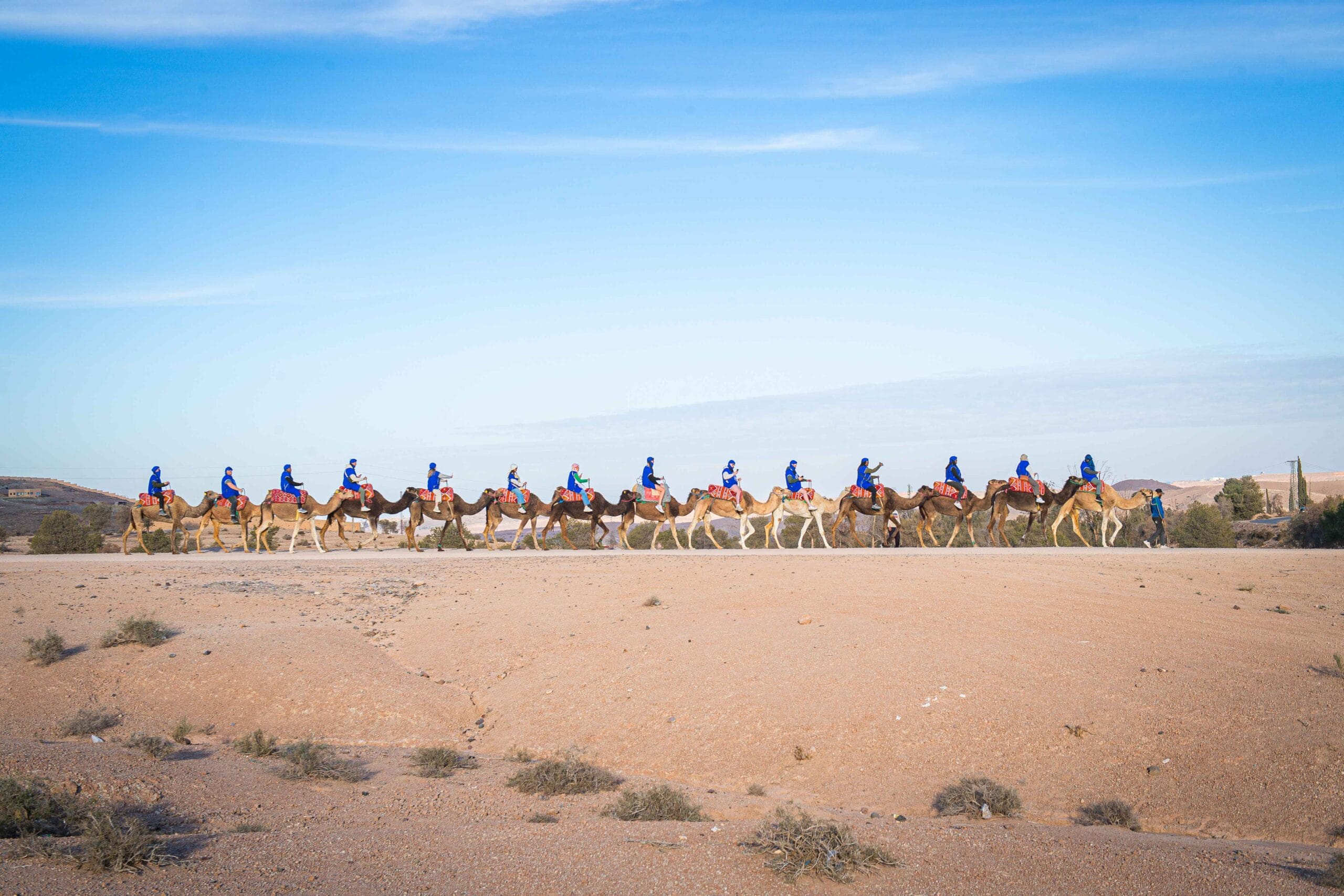
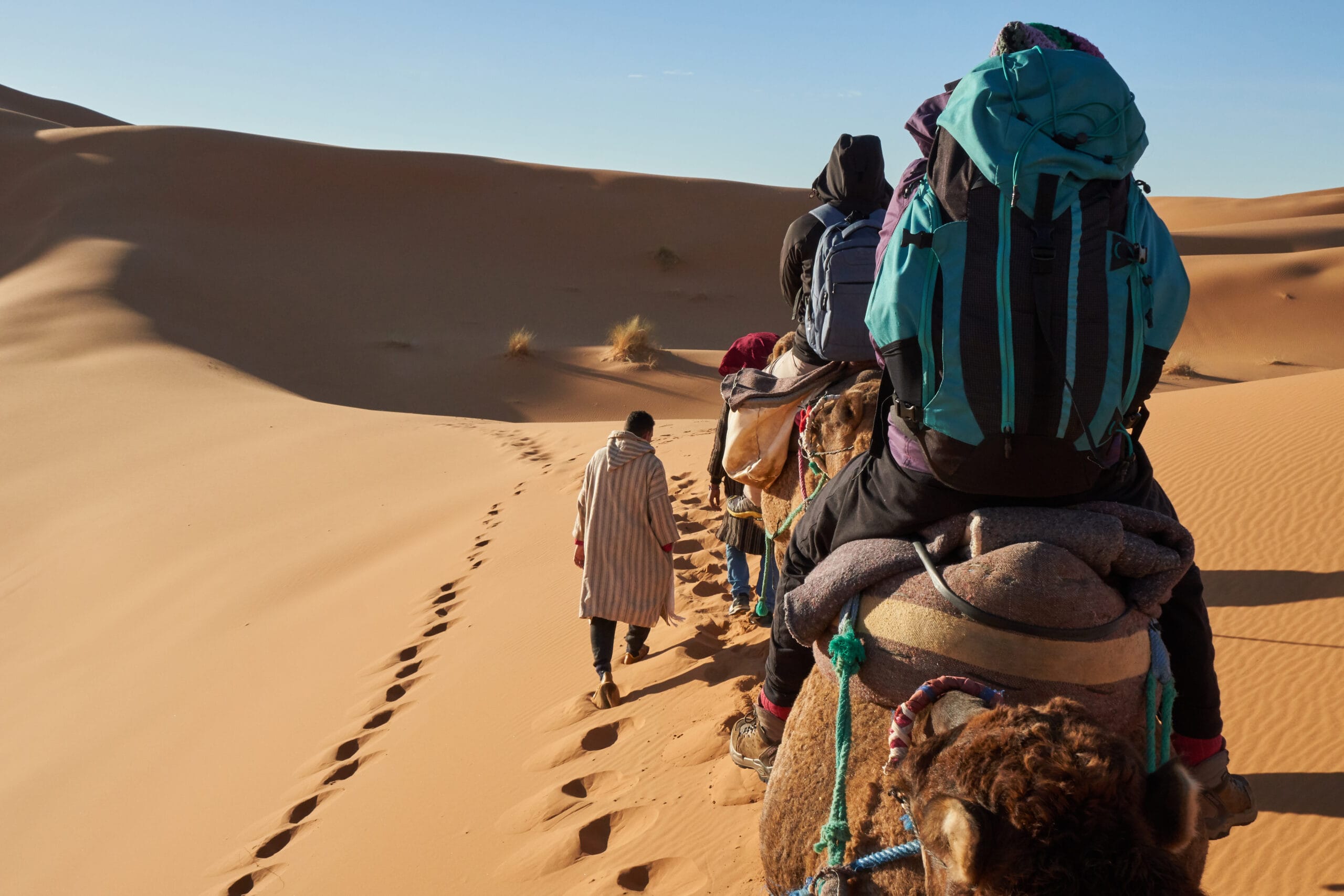
Of all the experiences available in Morocco, few are as quietly powerful as an Agafay camel ride. There is something about the slow, swaying gait of a dromedary crossing an open stone plateau — the creak of the saddle, the warmth of the animal beneath you, the vast silence broken only by wind and distant birdsong — that connects you to something genuinely ancient. Long before roads reached the Agafay Desert, Berber traders and nomadic families crossed this very plateau on camelback, navigating by the Atlas Mountains and the stars. When you book an Agafay camel ride with Quad Marrakech, you are stepping — briefly but meaningfully — into that same tradition. This guide covers everything you need to know about the Agafay camel ride: what the experience involves, what to expect from the terrain and the animals, how to prepare, which packages offer the best value, and why the Agafay plateau is widely considered the finest camel riding destination within reach of Marrakech.
The Agafay camel ride is a guided dromedary trekking experience on the rocky plateau south-west of Marrakech, approximately 35 kilometres from the city centre. Unlike the famous camel rides offered in the Saharan dune fields of Merzouga — which require a full two-day journey from Marrakech — the Agafay camel ride is accessible in under an hour and delivers an equally authentic, immersive encounter with Moroccan desert culture.
The Agafay camel ride takes place on the open plateau terrain: wide rocky paths, dry riverbeds, and ancient tracks that wind between Berber farming settlements and sparse argan groves. The landscape is dramatic without being intimidating — the gentle undulations of the plateau make it perfectly suited to camel trekking, allowing riders to focus entirely on the experience rather than bracing against difficult gradients.
Each Agafay camel ride is led by experienced Berber handlers who have worked with these animals their entire lives. The handlers walk alongside the camels throughout the trek, managing the animals and sharing knowledge about the desert, the Berber traditions of the plateau, and the natural landmarks visible from the trail. This human element — the direct connection with people whose culture is rooted in this landscape — is one of the most consistently praised aspects of the Agafay camel ride by travellers who have experienced it.
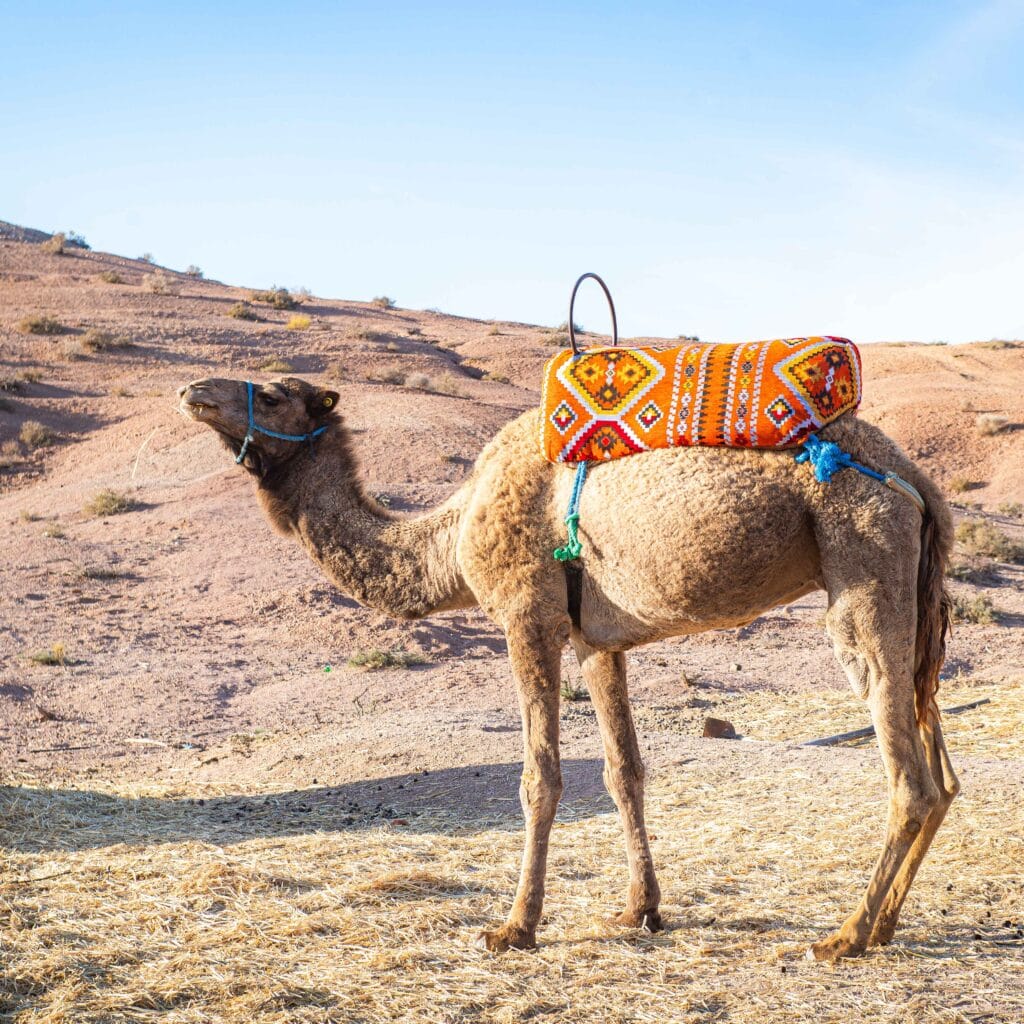
The choice of the Agafay plateau as the setting for the Agafay camel ride is not simply a matter of proximity to Marrakech — it is a genuine reflection of the landscape’s character and its deep historical association with camel culture.
The Agafay Desert is a rocky, mineral plateau — technically classified as a desert steppe rather than a sand desert. Its surface of pale limestone and compacted earth is firm and stable underfoot, which makes it ideal for camel trekking. Dromedaries are supremely well-adapted to this type of terrain: their broad, cushioned feet distribute weight evenly across hard ground, and their natural gait is at its most fluid on open, level surfaces. An Agafay camel ride therefore allows the animals to move naturally and comfortably, which directly translates to a smoother, more enjoyable experience for the rider.
The visual reward of the Agafay Desert camel ride is exceptional. The plateau’s elevated position — approximately 600 metres above sea level — provides unobstructed views across the desert to the snow-capped peaks of the High Atlas Mountains on clear days. Sunsets from the plateau are extraordinary: as the light shifts from gold to orange to deep rose, the Atlas silhouette darkens dramatically against the sky while the rocky desert floor glows with warm colour. Timing your Agafay camel ride to coincide with sunset is one of the most reliably beautiful experiences available anywhere near Marrakech.
The Agafay plateau is home to several Berber communities who have farmed and herded on this land for generations. An Agafay camel ride passes through and alongside this living landscape — not a recreated tourist stage set, but genuine Berber territory where the animals, the handlers, and the paths all carry real cultural weight. This authenticity is something that travellers consistently cite as the quality that distinguishes the Agafay camel ride from more commercial camel experiences in highly touristic zones.
All Agafay camel ride packages with Quad Marrakech include round-trip transfer from Marrakech. A private vehicle collects you from your hotel, riad, or a central city meeting point and drives you south-west to the Agafay plateau. The journey takes approximately 40–50 minutes and passes through the outskirts of Marrakech before entering the open desert road, providing your first views of the plateau and the Atlas Mountains ahead.
On arrival at the Quad Marrakech base camp, guests are welcomed with traditional Moroccan mint tea. The Agafay camel ride handler — typically a Berber man who has worked with these animals since childhood — introduces himself and the camels by name. This personal introduction is more than a formality: it establishes a relationship of trust and care that shapes the entire experience. Handlers explain the characteristics of each animal, how to sit correctly in the saddle, and what to expect during the mounting and dismounting process.
Mounting a camel for the Agafay Desert camel ride is an experience in itself — and one that surprises most first-time riders with its drama. Dromedaries kneel to allow riders to mount, which means the initial seated position is level. Then, as the camel rises, it unfolds its rear legs first — creating a sudden, steep forward tilt — before rising at the front. New riders are advised to lean back slightly as the rear legs extend and hold the saddle horn with both hands. Within seconds, the camel is standing and the Agafay camel ride has begun.
Once underway, the Agafay camel ride settles into a gentle, swaying rhythm that most riders find deeply relaxing. The dromedary’s natural walking pace is unhurried, allowing you to take in the landscape fully — the wide open plateau, the rocky formations on the horizon, the distant peaks of the Atlas, the play of light across the desert floor. Handlers guide the camels along established routes, narrating points of interest and answering questions about Berber life on the plateau. The duration of the Agafay camel ride is typically one hour, covering approximately 4–6 kilometres of desert terrain.
The dismounting process for the Agafay camel ride is the reverse of mounting — the camel folds its front legs first (the forward tilt again), then lowers the rear. Handlers assist every rider and ensure the process is safe and comfortable. After dismounting, most guests spend a few minutes with the animals — petting them, taking photographs with the handlers, and appreciating the scale of the dromedary close up before returning to the camp for refreshments.
Quad Marrakech offers several packages built around the Agafay camel ride, ranging from a standalone one-hour trek to full combined evening experiences that pair the camel ride with dinner, live entertainment, and other desert activities.
All Agafay Desert camel ride packages include round-trip transfer from Marrakech, experienced Berber handler, safety instruction, and free cancellation up to 24 hours before the experience.
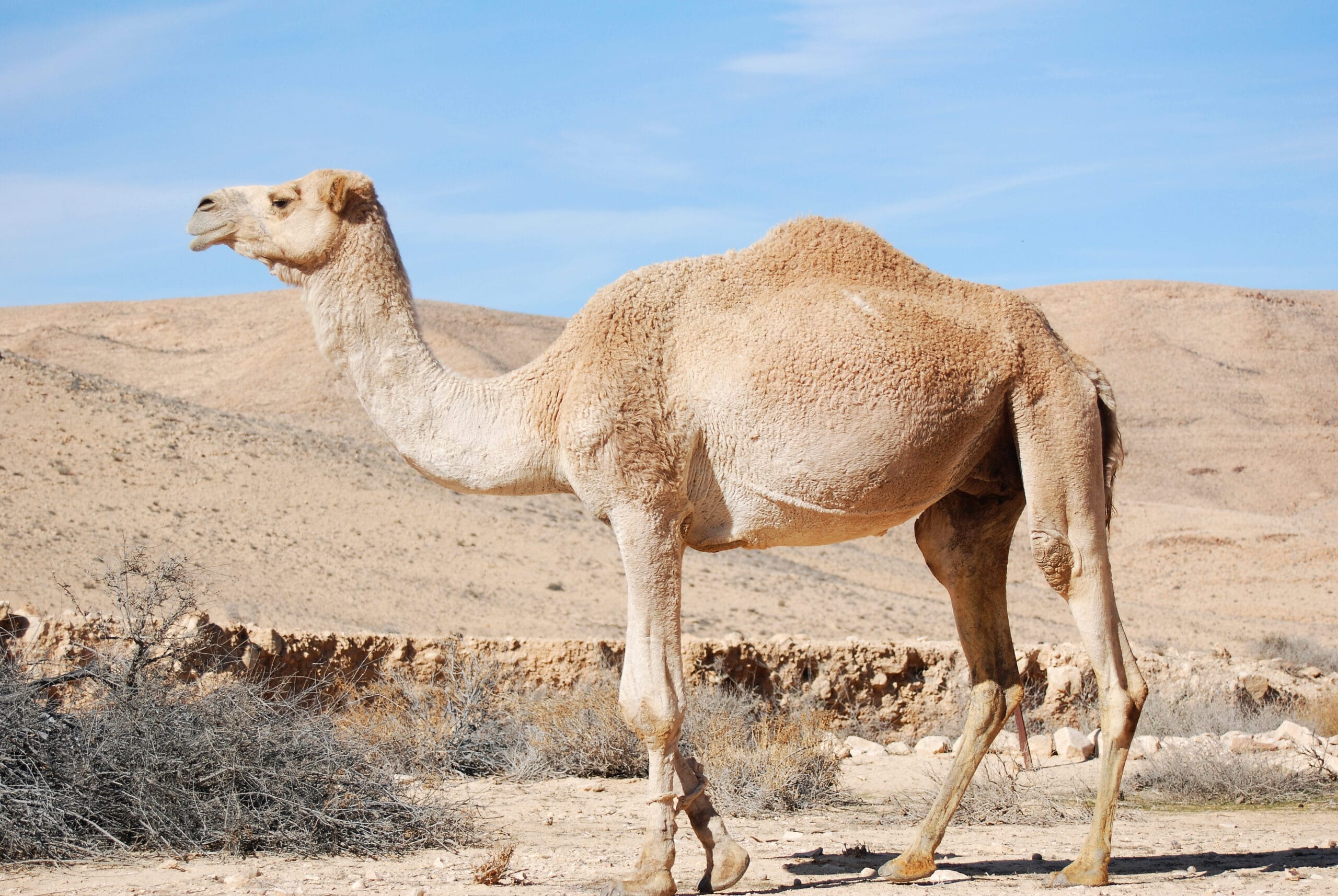
A great Agafay camel ride begins with understanding the animal that makes it possible. The dromedaries used by Quad Marrakech are single-humped Arabian camels — the predominant species in Morocco and throughout North Africa. These animals have been central to Berber and Arab culture in this region for over two millennia, serving as the primary means of transport across desert terrain long before any road existed between the Atlas Mountains and the Sahara.
Quad Marrakech is committed to maintaining the highest standards of animal welfare for the dromedaries used in the Agafay camel ride. The animals are fed, watered, and rested according to a structured daily schedule. Working hours per animal are limited to ensure the camels are never overworked. Veterinary care is provided on a regular basis and immediately in the event of any health concern. Riders are briefed on respectful interaction with the animals — no shouting, no sudden movements, and no feeding without handler permission.
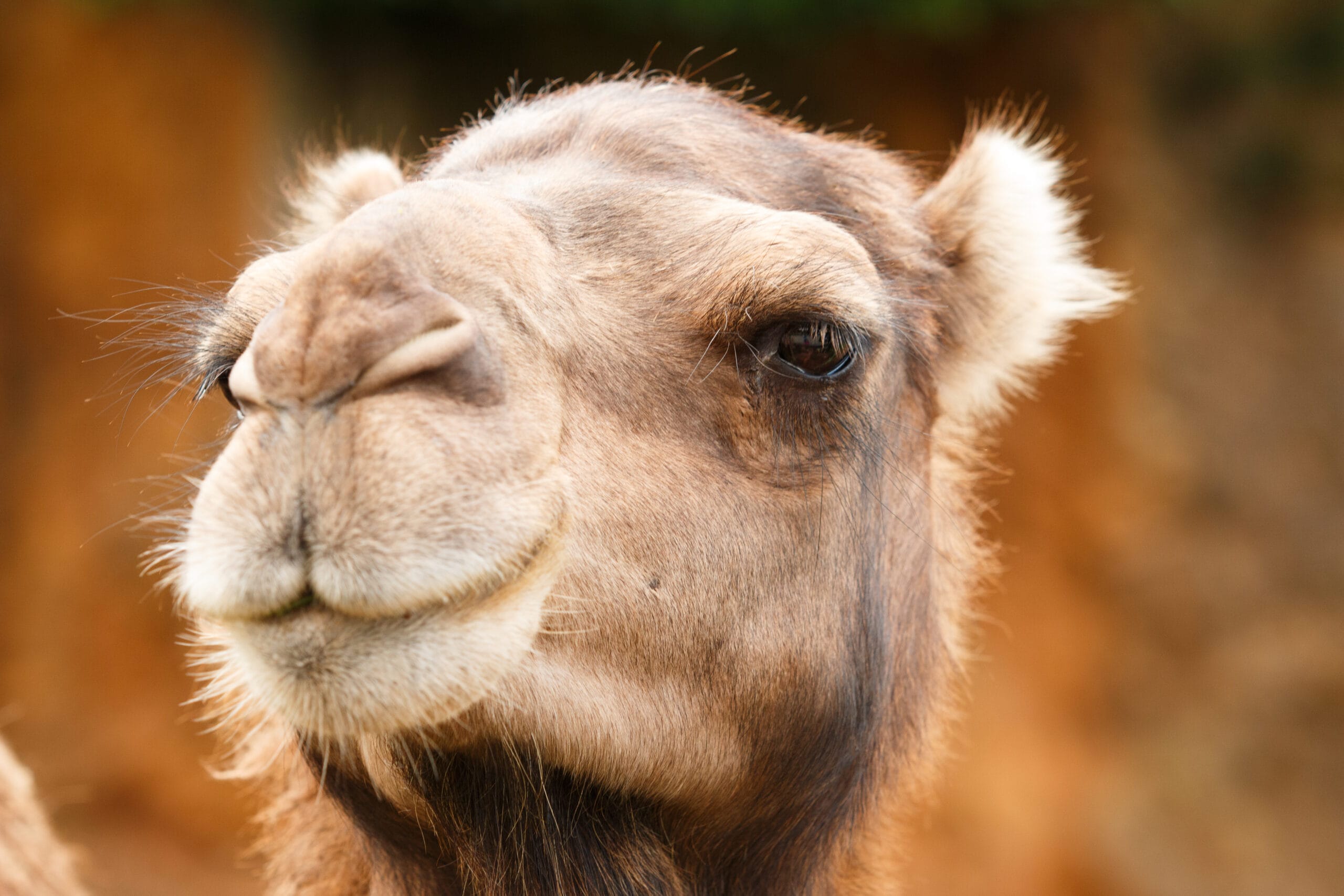
The most common question asked by first-time riders during an Agafay Desert camel ride is about the hump. Contrary to a widespread belief, the dromedary’s hump does not store water — it stores fat, which the animal metabolises for energy during periods of limited food availability. A healthy, well-fed dromedary has a firm, upright hump; a depleted animal’s hump becomes flaccid and leans to one side. The camels used in the Agafay Desert camel ride have full, healthy humps — a visible indicator of their good condition and care.
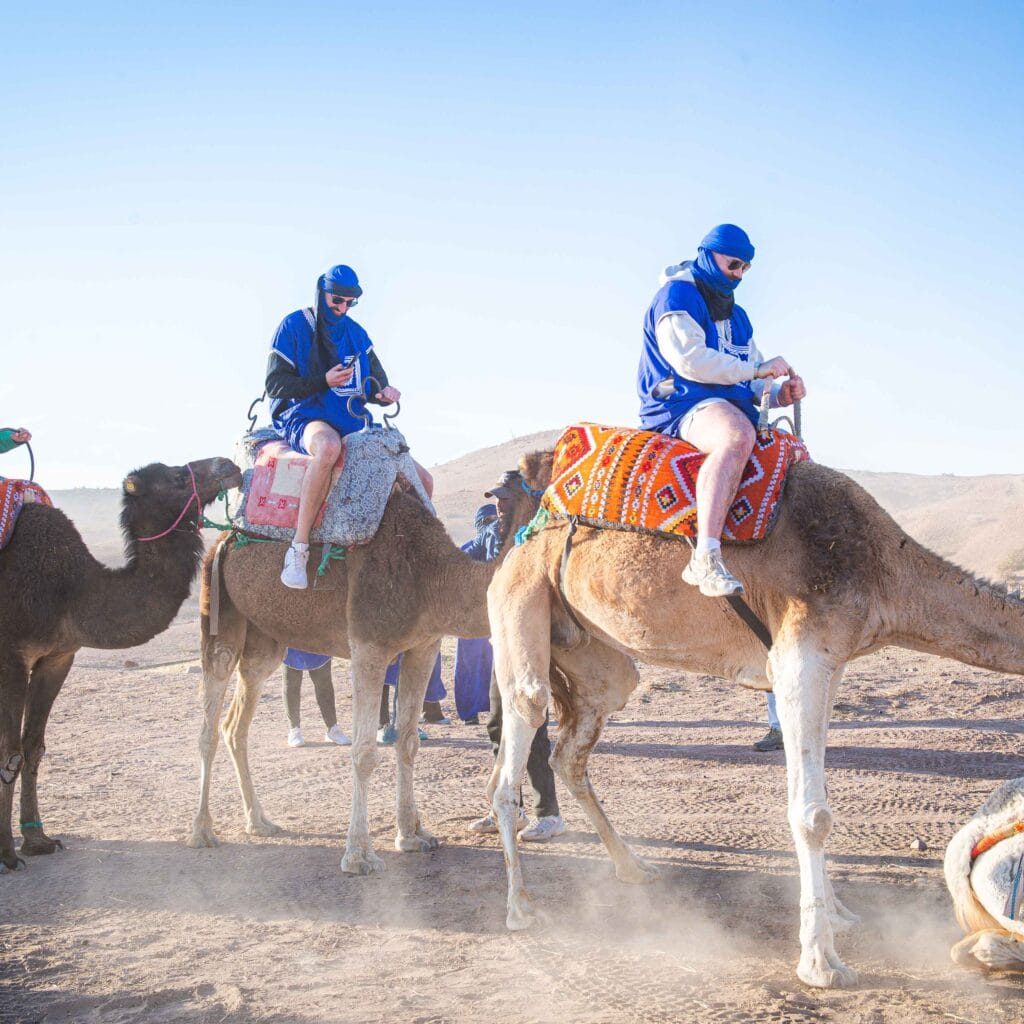
One of the great strengths of the Agafay Desert camel ride is its accessibility to a genuinely wide range of travellers.
The Agafay camel ride is one of the most reliably exciting activities for children visiting Morocco. Children aged 3 and above can ride with a parent or independently (with handler walking alongside) on a child-appropriate saddle. The animals are gentle, the pace is slow, and the handlers are experienced at working with young riders. For children, the sheer novelty and scale of the experience — sitting atop a camel, moving through a desert landscape — creates memories that last far longer than any souvenir.
The Agafay Desert camel ride at sunset is one of the most romantic experiences available near Marrakech. The golden light, the silence of the plateau, the gentle rhythm of the ride, and the dramatic Atlas Mountains backdrop create a naturally intimate atmosphere. Many couples choose the sunset Agafay Desert camel ride combined with a private dinner as a highlight of their Moroccan honeymoon or anniversary trip.
Solo travellers find the Agafay Desert camel ride an excellent way to connect with Moroccan culture in a natural, unhurried setting. The small-group format means you ride alongside other travellers from around the world, and the shared experience of discovering the plateau together is naturally sociable without being forced.
The Agafay Desert camel ride is well suited to older travellers who want an authentic desert experience without the physical demands of quad biking or long walks. The main physical consideration is the mounting and dismounting process, which involves a brief but pronounced forward tilt. Guests with significant hip or lower back conditions are advised to discuss this with the Quad Marrakech team before booking, as handlers can offer modified mounting assistance.
The Agafay Desert camel ride is available every day of the year, and each season offers something different.
Spring offers the most balanced conditions for the Agafay camel ride: mild temperatures (18°C–26°C), clear skies, occasional wildflowers on the plateau, and the Atlas Mountains still capped with snow from winter. Spring is the most popular season and advance booking is essential.
Autumn is the second peak season for the Agafay camel ride, offering similar conditions to spring with the added benefit of long, warm evenings that extend well into October. The quality of light for photography is superb in autumn, and the plateau is less busy than in spring.
Summer Agafay camel ride sessions should be scheduled in the late afternoon or evening when temperatures on the plateau drop from the intense midday heat to a pleasant 28°C–32°C. The long summer days mean sunset sessions begin later (typically after 6pm), creating opportunities for a spectacular ride as the sky changes colour over the Atlas.
Winter brings the most dramatic Atlas Mountain views to the Agafay camel ride — the mountains carry their heaviest snow cover, creating a striking contrast with the pale desert floor. Mornings and evenings are cold (8°C–14°C), so warm clothing is essential, but the midday Agafay Desert camel ride in winter is crisp, clear, and beautiful.
Many travellers considering an Agafay camel ride wonder how it compares to a Sahara camel trek at Merzouga or Zagora. The honest answer is that the two experiences are genuinely different, and both have their place depending on your available time and priorities.
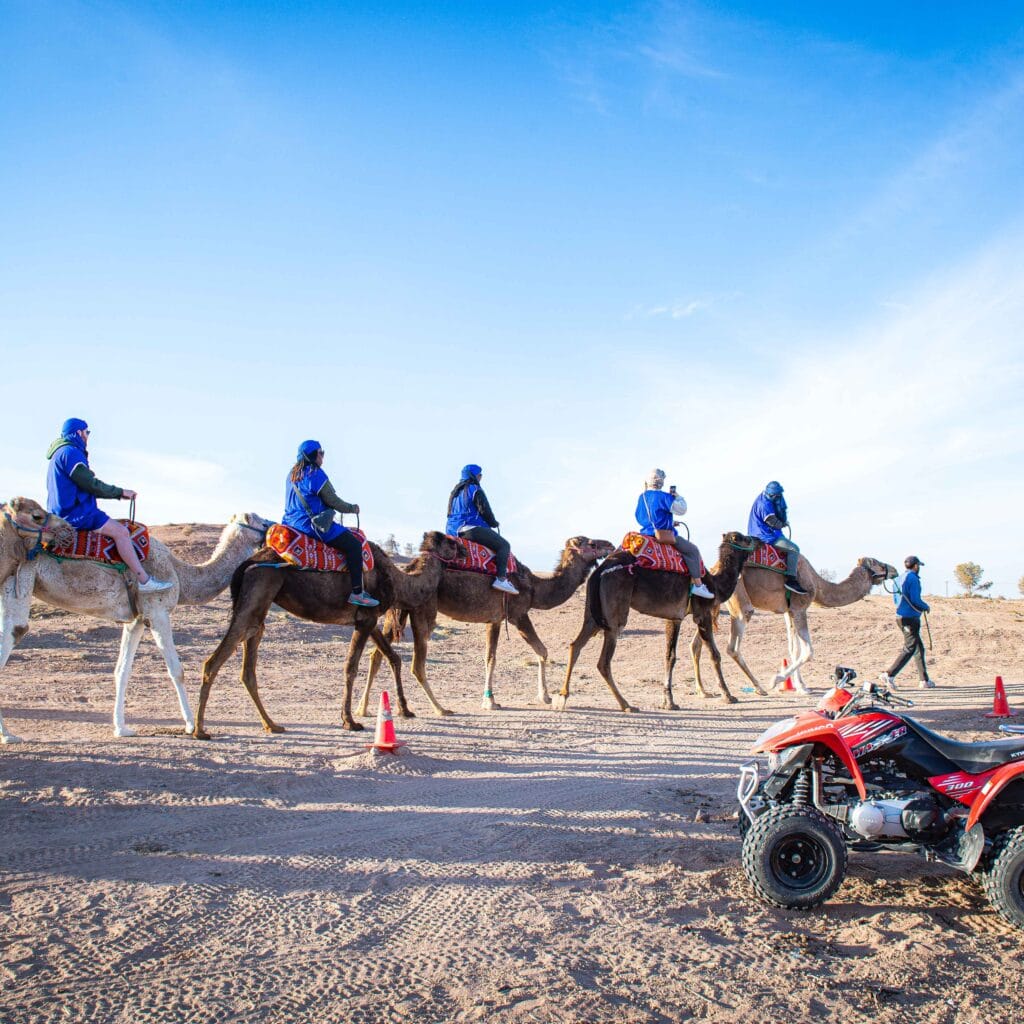
Yes. A seated rider on the Agafay Desert camel ride sits approximately 2 to 2.5 metres above ground level. The saddle is stable and the handlers maintain constant control of the animals. Most riders who were initially concerned about the height find that once the camel is moving, the sensation is too absorbing to trigger any anxiety.
The dromedaries used in the Agafay Desert camel ride are accustomed to working with tourists and are calm, well-handled animals. They can occasionally make loud vocalisations — particularly during mounting — which sounds alarming but is entirely normal camel behaviour. Handlers are expert at managing the animals and will always intervene if a camel shows any signs of agitation.
Pregnant women beyond the first trimester are advised against the Agafay Desert camel ride due to the physical jolt involved in mounting and dismounting. If you are in your first trimester and in good health, please discuss your specific situation with the Quad Marrakech team before booking. They will advise honestly based on your stage of pregnancy and any other activities planned during your visit.
Group sizes vary depending on the package selected. Standard Agafay Desert camel ride sessions typically involve between 2 and 10 riders, ensuring the handler can give adequate attention to each participant. Private and VIP bookings are available for couples, families, or groups who prefer an exclusive experience.
For animal welfare reasons, there is a practical weight guideline of approximately 100–110 kg per rider for standard Agafay Desert camel ride sessions. Riders approaching or exceeding this guideline are encouraged to contact the Quad Marrakech team before booking, as alternative arrangements or specific animals can sometimes be accommodated.
Absolutely — and this combination is among the most popular bookings at Quad Marrakech. The quad + Agafay Desert camel ride + dinner show package allows you to experience both motorised and animal-powered desert transport in a single spectacular afternoon and evening. The contrast between the adrenaline of the quad ride and the meditative calm of the camel trek makes each activity feel more vivid by comparison.