No products in the basket.

 Zakaria Belkhay
May 13, 2026
Zakaria Belkhay
May 13, 2026
Marrakech weather is one of the most important variables in planning a trip to Morocco’s Red City — and one of the most misunderstood.
Travelers who arrive in July expecting “warm Mediterranean weather” find themselves in 42°C heat with no shade in the medina. Travelers who avoid Marrakech in January because they assume Morocco is always hot miss some of the most beautiful, crowd-free days the city offers. The reality of Marrakech weather is more nuanced, more seasonal and ultimately more manageable than most travel guides suggest — if you know what to expect month by month.
This complete guide to Marrakech weather gives you honest, practical information for every month of the year: temperatures, rainfall, crowd levels, what to pack, which activities work best in each season, and the specific weather-related advice that turns a good Marrakech trip into a genuinely extraordinary one.
| Key climate facts: Marrakech has a semi-arid climate with hot, dry summers and mild, occasionally wet winters. Annual rainfall is low (approximately 240mm) and concentrated in November–February. Summer temperatures regularly exceed 38°C. The Atlas Mountains create a microclimate effect — temperatures in the mountains are 10–15°C cooler than the city at all times. |
| Month | Avg High | Avg Low | Rainfall | Crowds | Overall | Best For |
| Jan | 18°C | 5°C | 25mm | Low | ⭐⭐⭐⭐ | Culture, quiet |
| Feb | 20°C | 6°C | 22mm | Low | ⭐⭐⭐⭐ | Budget, photos |
| Mar | 23°C | 9°C | 18mm | Medium | ⭐⭐⭐⭐⭐ | Everything |
| Apr | 26°C | 11°C | 12mm | High | ⭐⭐⭐⭐⭐ | Peak season |
| May | 30°C | 14°C | 8mm | High | ⭐⭐⭐⭐⭐ | Best overall |
| Jun | 36°C | 18°C | 3mm | Medium | ⭐⭐⭐ | Evenings only |
| Jul | 40°C | 22°C | 1mm | Low | ⭐⭐ | Not recommended |
| Aug | 39°C | 22°C | 2mm | Low | ⭐⭐ | Not recommended |
| Sep | 34°C | 17°C | 5mm | Medium | ⭐⭐⭐⭐ | Improving |
| Oct | 28°C | 13°C | 15mm | High | ⭐⭐⭐⭐⭐ | Excellent |
| Nov | 22°C | 9°C | 30mm | Medium | ⭐⭐⭐⭐⭐ | Hidden gem |
| Dec | 18°C | 6°C | 28mm | Low | ⭐⭐⭐⭐ | Festive, quiet |
January is one of Marrakech’s most underrated months. Average highs reach 18°C in the afternoon — comfortable enough for exploring the medina in a light jacket. Mornings and evenings are genuinely cold (5–8°C), requiring warm layers. Rainfall occurs in short bursts rather than continuous grey days. The sky is often brilliantly clear, revealing the snow-capped Atlas Mountains in their most dramatic winter form. Crowds are minimal and riad prices are at their annual low.
February sees Marrakech warming gradually towards spring. The almond trees in the Atlas Mountain foothills bloom in February — one of Morocco’s most beautiful natural spectacles. Temperatures climb to 20–22°C in the afternoon, making medina exploration genuinely comfortable. Rain is still possible but increasingly brief. Crowds remain low, prices reasonable, and the light has a crystal quality that photographers love.
March is arguably the single best month to visit Marrakech. Spring has arrived definitively: wildflowers cover the Agafay plateau, the Atlas Mountains still carry snow on their highest peaks while the lower slopes turn green, temperatures hover in the ideal 20–25°C range for all activities. Days are long, light is beautiful, crowds are building but not yet overwhelming, and every excursion — desert, mountains, souks — operates under perfect conditions.
April is Marrakech’s peak tourist month. The combination of school holiday periods (especially Easter), comfortable temperatures (24–28°C) and beautiful conditions makes it the busiest month of the year. Expect higher riad prices, fully booked popular restaurants, and more competition for activities. Book everything at least 2–3 weeks in advance. Despite the crowds, April Marrakech weather is genuinely outstanding — warm days, cool evenings, clear skies.
May represents Marrakech at its peak combination of weather, atmosphere and activity. Temperatures reach 28–32°C — warm but not yet oppressive, with cool breezes that make midday in the medina manageable. The rose harvest in Morocco’s Dadès Valley (a long day trip or overnight from Marrakech) reaches peak bloom in late April to May. Evenings are perfect — warm enough to sit outside all night, cool enough to sleep without air conditioning.
June marks the beginning of Marrakech’s hot season. Average highs reach 35–37°C and the midday heat in the medina becomes genuinely uncomfortable — narrow alleys with minimal airflow trap heat effectively. However, June is entirely manageable with the right schedule: early morning activity (7:00–11:00 AM), midday rest with air conditioning or pool (11:00 AM–4:30 PM), late afternoon and evening activity. Crowds decrease as school holidays haven’t fully begun, making June a genuine value proposition for heat-tolerant travelers.
July and August are Marrakech’s most challenging weather months. Temperatures regularly exceed 40–42°C in the afternoon. The heat is dry (low humidity) which makes it more bearable than tropical heat, but the medina’s confined spaces amplify it significantly. Many quality riads and restaurants close in August, and the city loses some of its usual energy as local families leave for the coast.
The honest assessment: July and August are not good months for a first visit to Marrakech. If these are your only available dates, the experience is salvageable with a strict morning-only schedule, excellent air conditioning, a quality pool and sunset-only outdoor activity. But you will miss a significant portion of the city’s experience.
September is Marrakech’s recovery month. The summer heat begins to retreat — highs drop from 40°C to 32–34°C by month’s end. The city’s energy rebuilds as local life returns to normal after August. Early September is still very warm; late September approaches the ideal. If you’re visiting in September, try to time it for the last 10 days of the month when conditions improve noticeably.
October is arguably the perfect Marrakech weather month. Temperatures settle at a brilliant 26–30°C — warm enough for shorts and sundresses during the day, cool enough for comfortable evenings outdoors. The summer crowds have gone, the harvest season brings a particular richness to the markets and countryside, and the Atlas Mountains look spectacular in autumn clarity. Riad rates are significantly better than April peak season.
November is the month that travel-savvy visitors to Marrakech keep to themselves. Temperatures cool to a lovely 18–22°C — ideal for walking, hiking, souk exploration and desert evenings. Crowds thin dramatically after October’s half-term peak. Riad prices drop 20–30% below October levels. The Atlas Mountains receive their first snow, creating the extraordinary white-peaks-over-red-city landscape that defines Marrakech’s most iconic photographs. Rain is possible (typically 3–5 rainy days in November) but rarely disrupts a full day.
December surprises many visitors with its beauty. Temperatures are cool (16–19°C in the afternoon, 6–8°C at night) but rarely cold enough to prevent full outdoor activity. The medina in December has a particular warmth — lantern light, the smell of charcoal grills, communal spaces busy with local life. International visitors arrive for the Christmas and New Year period, making mid-to-late December busier than early December. Book accommodation and activities early if you’re visiting over Christmas week.
If you have no fixed travel dates and are planning your first Marrakech trip, these four months offer the best combination of weather, activity availability, crowd manageability and visual impact. May and October are the author’s top two picks: temperatures are ideal, conditions are beautiful and the crowds are manageable without being overwhelming.
These three months offer the lowest riad rates, the most negotiating leverage in the souks and the fewest crowds. January and February are cool but beautiful — proper layers and an open mindset are the only requirements. November is arguably the best value month in the entire calendar, combining near-perfect weather with off-season prices and extraordinary visual conditions.
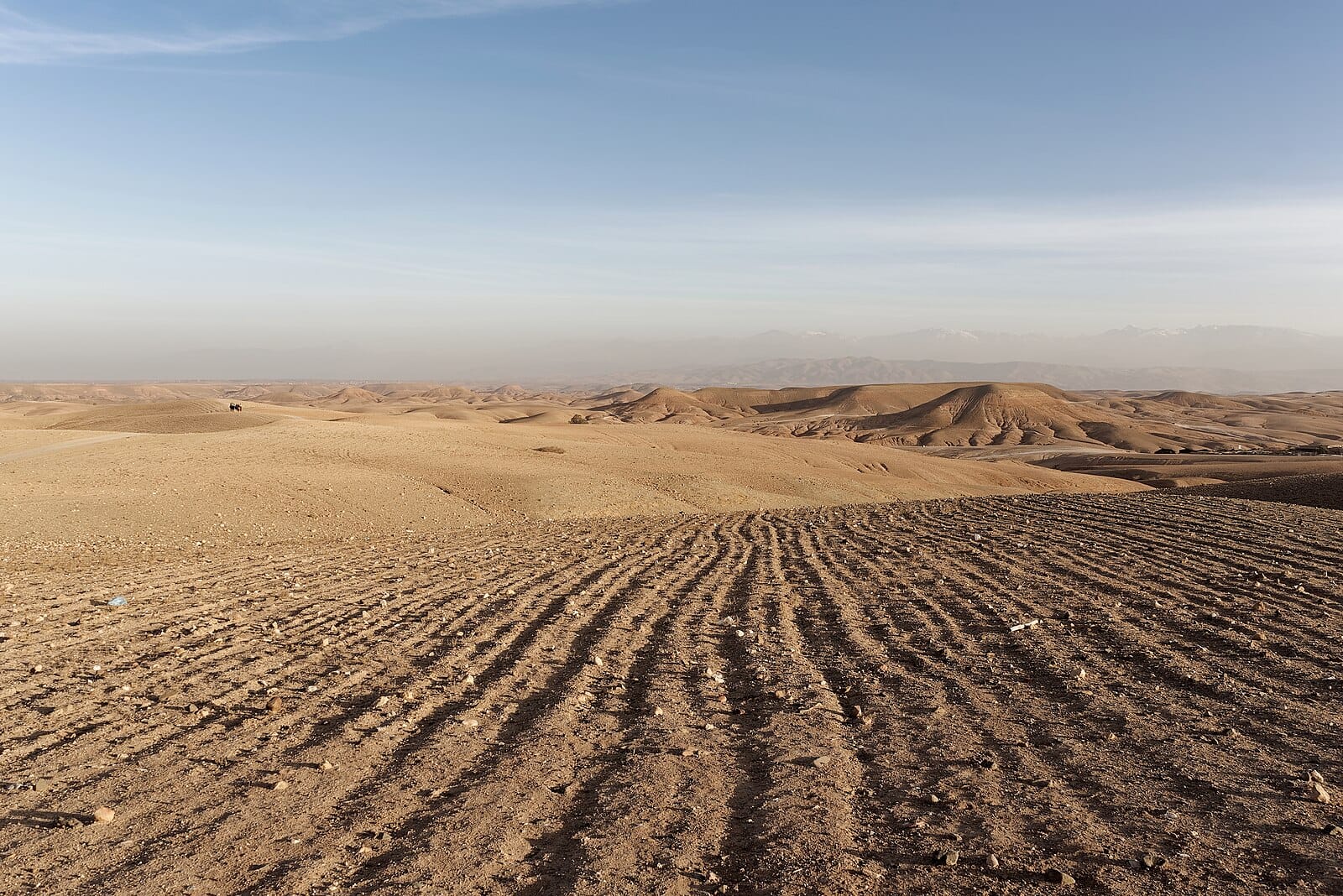
Desert and mountain activities reach their peak enjoyment in spring and autumn. The Agafay Desert is functional year-round but outstanding in these windows: evenings are comfortable for outdoor dining, Atlas views are clear, and the light for photography is extraordinary. The Atlas Mountains are ideally hiked in spring (April–June) for snow-free high trails and autumn (September–November) for clear skies and harvest atmosphere.
June offers genuinely good conditions before the peak heat of July–August, with lower prices and fewer tourists than May. September improves progressively through the month and is perfectly manageable by its final two weeks. Both months require heat management discipline — but the savings on accommodation (often 30–40% below peak rates) and the reduced competition for desirable experiences make them viable for the right traveler.
| Activity | Ideal Months | Workable Months | Avoid If Possible |
| Agafay Desert evening | Mar–May, Oct–Nov | Dec–Feb (cold), Jun, Sep | Jul–Aug (extreme heat) |
| Camel ride at sunset | Mar–May, Oct–Nov | All year workable | Jul–Aug (heat risk) |
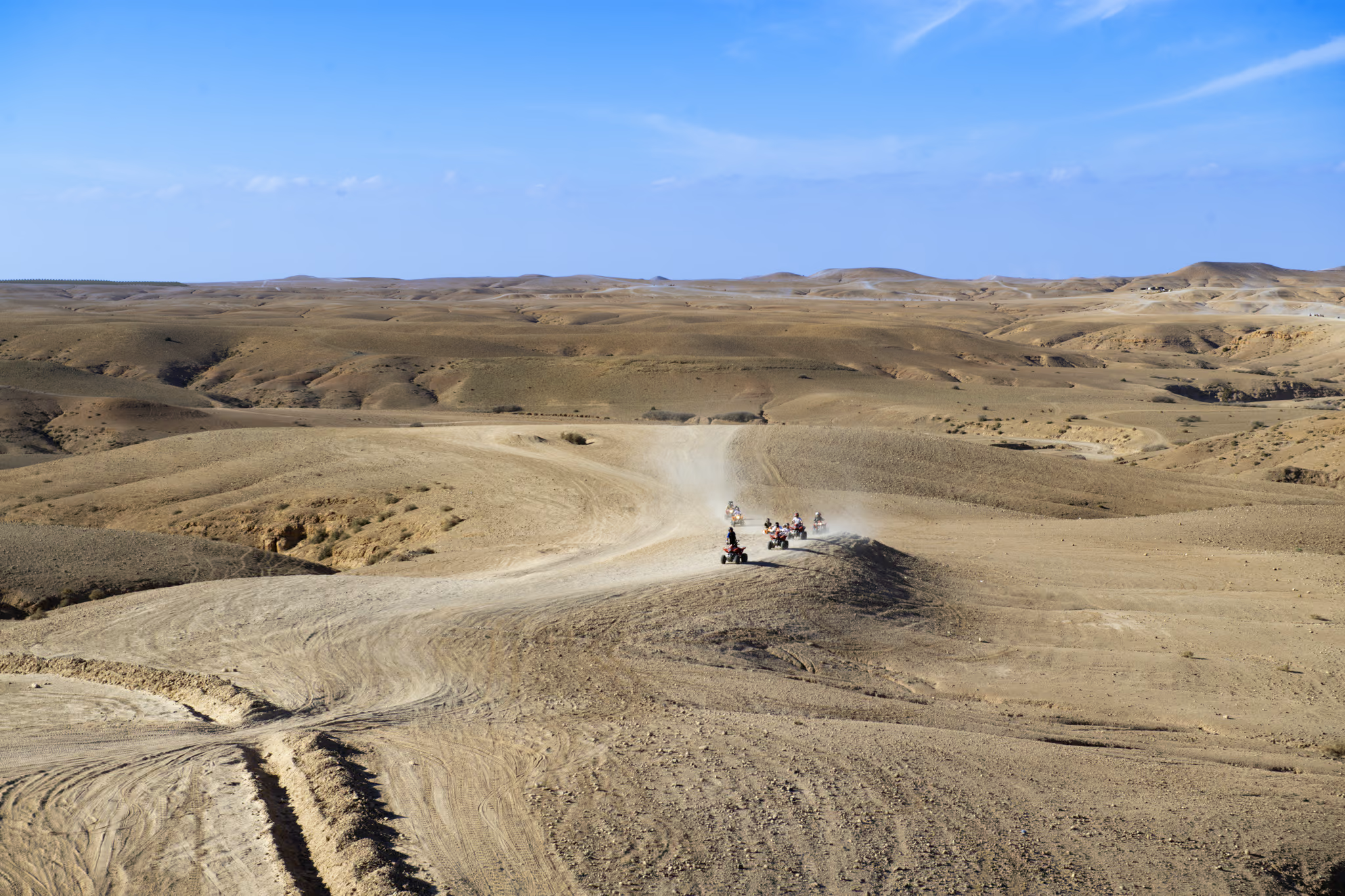
| Quad biking Agafay | Mar–May, Oct–Nov | Dec–Feb (cold), Jun, Sep | Jul–Aug (extreme heat) |
| Atlas Mountains hiking | Apr–Jun, Sep–Nov | Dec–Mar (snow gear needed) | Jul–Aug (altitude heat) |
| Hot air balloon | Oct–Apr | Sep, May | Jun–Aug (wind, heat) |
| Medina exploration | Mar–May, Oct–Nov | Dec–Feb, Sep | Jul–Aug midday |
| Ourika Valley day trip | Feb–May, Sep–Nov | Dec–Jan (cold), Jun | Jul–Aug (heat) |
| Stargazing Agafay | Sep–Apr | May–Jun (haze building) | Jul–Aug (haze) |
One of the most common weather-related mistakes Marrakech visitors make is assuming the mountains will feel the same as the city. The Atlas Mountains are consistently 10–15°C cooler than Marrakech at the same time of day. This means:
This temperature differential is not a problem — it’s part of what makes the Atlas day trip so spectacular. But it does mean packing a warm layer even when the Marrakech forecast says it’s warm.
The most important Marrakech weather insight is this: there is no truly bad month to visit Marrakech if you know what to expect and adjust accordingly. January offers beautiful winter light and empty riads. July is extreme but manageable with strict scheduling. November is secretly perfect. The travelers who have bad weather experiences in Marrakech are almost always those who arrived with the wrong expectations — too many summer layers in May, not enough warmth for January desert evenings, no shade plan for August afternoons.
The best months remain March–May and October–November for the widest range of enjoyable conditions. But Marrakech rewards the prepared traveler in every season.
Key reminders:
Whatever month you visit, the Agafay Desert sunset and Berber dinner experience is available and beautiful. Our transfers and activities run year-round with equipment and timing adapted to each season — ask about our winter desert evening packages which include warm Berber blankets and hot mint tea under the stars.
The best months for Marrakech weather are October and May — both offer ideal temperatures (24–30°C), clear skies, excellent light and comfortable conditions for all activities. March and April are very close seconds and are peak season for a reason. November is the hidden gem month for travelers who want near-perfect weather with lower prices and fewer crowds. Avoid July and August unless heat management is part of your travel skill set.
Yes, but infrequently. Marrakech receives approximately 240mm of rain annually, mostly concentrated in November–February. Rain typically falls in short, intense bursts rather than prolonged grey days. It is uncommon to have more than 3–5 genuinely rainy days in any single month. Spring and summer are almost entirely dry. When rain does fall in winter or autumn, it often clears within a few hours, and the Atlas Mountains after rain are spectacularly clear.
Very hot. Marrakech’s summer temperatures peak in July and August when afternoon highs regularly reach 40–42°C, occasionally exceeding 44°C during heatwave periods. The heat is dry (low humidity) which makes it more bearable than equivalent tropical temperatures, but the medina’s confined alleys trap heat and can feel significantly hotter than the official recorded temperature. June is more manageable (34–37°C) and September improves progressively. If visiting in summer, plan outdoor activity only for early mornings (7:00–11:00 AM) and evenings (5:00 PM onwards).
Marrakech winters are cool rather than cold by northern European standards. December through February typically sees afternoon highs of 16–20°C — comfortable for walking with a warm jacket. Mornings and evenings can be cold (4–8°C), and nights drop to near-freezing occasionally in January. Snow in the city itself is extremely rare (last significant snowfall was in 2018). The Atlas Mountains, however, receive substantial snow from December through March, creating stunning views from the city. Pack a proper winter coat and warm layers for evenings, especially for desert activities.