Lalla Takerkoust lake from Marrakech
Lalla Takerkoust, the reservoir lake south-west of Marrakech at the edge of the Agafay desert: where it is, how to get there, and what to do nearby.
Lalla Takerkoust is a lake of fresh water in a dry landscape, around forty kilometres south-west of Marrakech. It sits at the edge of the Agafay desert, with the High Atlas behind it, and it is often seen together with Agafay in the same outing.
What the lake is
It is not a natural lake but a reservoir, held back by a dam on the N’Fis river. The dam was built between 1929 and 1935 to irrigate the plain around Marrakech, and the village beside it gave the lake its name.
Because it is a reservoir, its size changes with the rain. After a wet winter the water reaches far up the shore; after dry years the shoreline retreats a long way, and the lake can look much smaller than in older photographs.
Where it is, and how to get there
The lake lies south-west of the city, on the same side as the Agafay plateau: count roughly forty-five minutes to an hour by road from central Marrakech. Most visitors come by car or taxi, or as part of an organised outing.
Lalla Takerkoust and Agafay
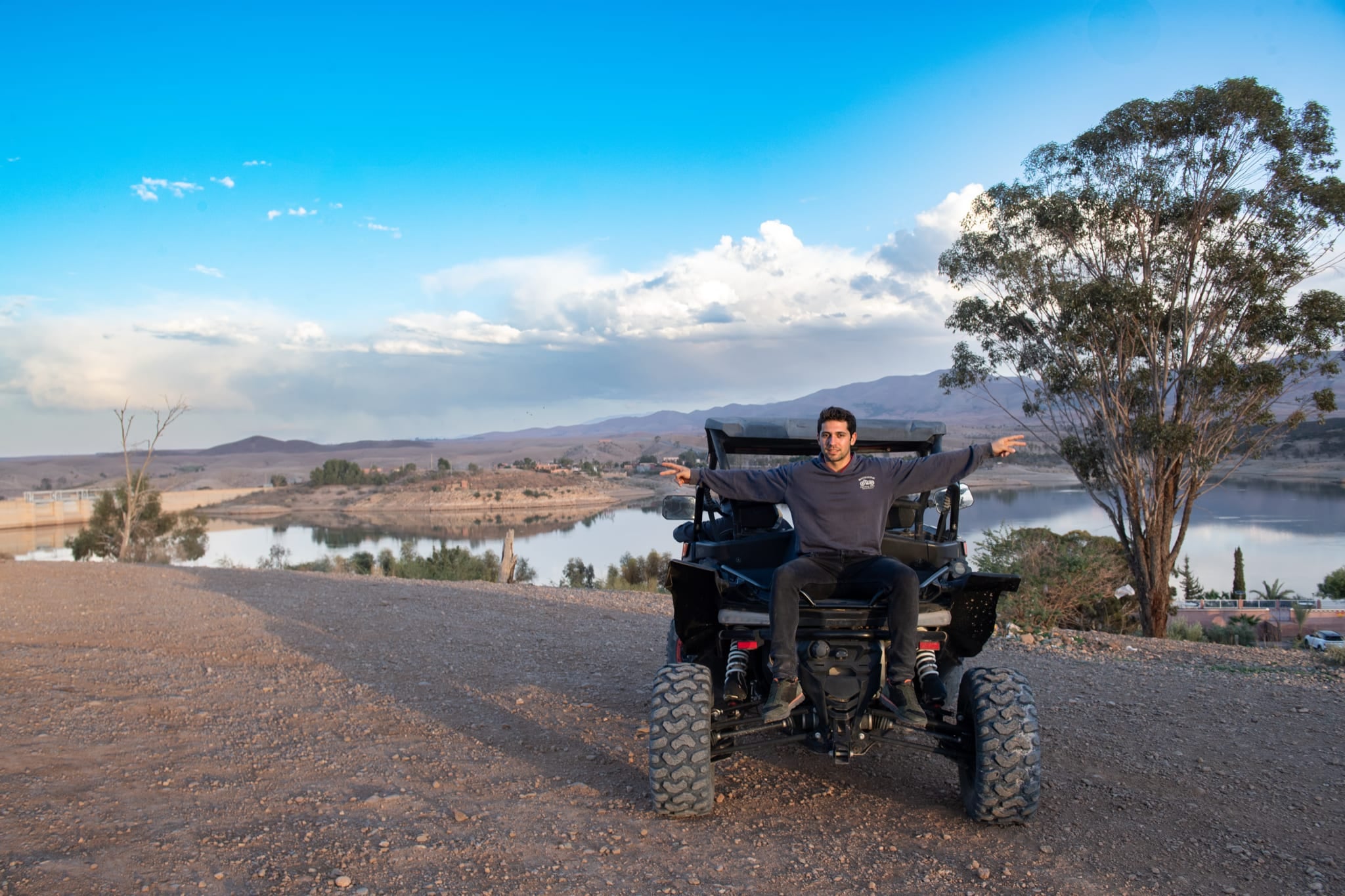
The two are neighbours. The Agafay desert is the stony plateau that rises beside the lake, and from its edge you can look down over the water with the Atlas beyond — the photograph at the top of this page was taken from one of our buggies.
Our outings run on the Agafay plateau, from our base there, rather than at the lake itself. If the lake is what you want to see, say so when you book: the two-hour buggy drive goes further out across the plateau than the one-hour version.
What to do around it
- Look at it from above. The view from the Agafay side, with the Atlas behind the water, is the reason most people come.
- Eat by the water. The lakeshore has restaurants and guesthouses with a view over the lake.
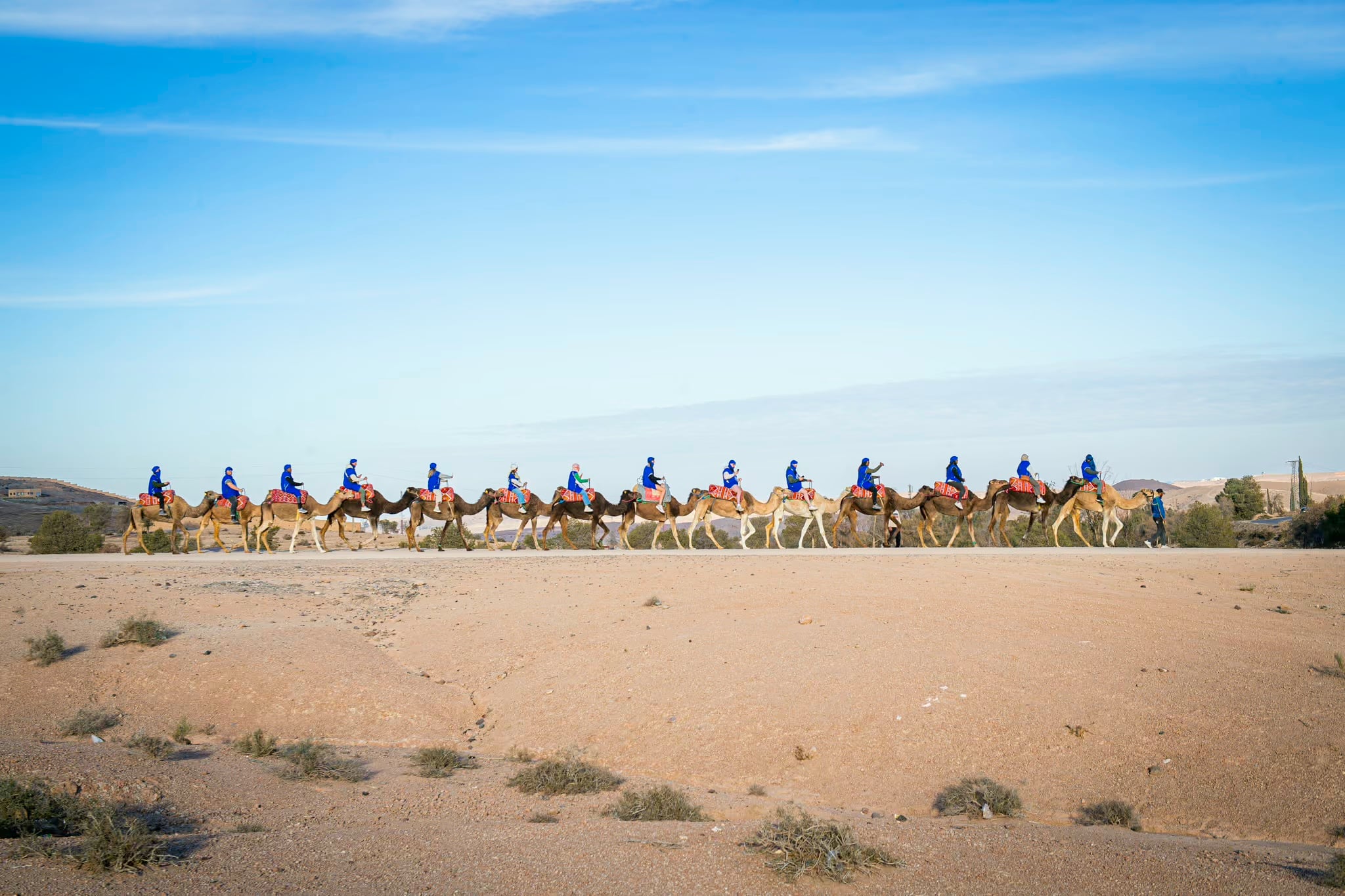
- Combine it with the desert. A quad, buggy or camel ride on the Agafay plateau and a stop at the lake fit in the same half-day.
When to go
Spring, after the winter rain, is when the lake is usually fullest and the Atlas still carries snow. Late afternoon gives the softest light over the water. In high summer the middle of the day is hot, as everywhere around Marrakech.
The Agafay desert from Marrakech covers the plateau beside the lake in more detail.