Marrakech travel tips: what to know
Marrakech travel tips: the medina, bargaining in the souks, what to wear, photos, Ramadan, cash, the heat and easy trips out of the city.
The Marrakech travel tips that matter most are simple: expect to get lost in the medina, bargain in the souks, dress modestly and carry cash. Plan around the heat as well — in summer the city is at its easiest early in the morning and in the evening — and keep half a day for the desert, 45 minutes away.
This guide covers the things to know before visiting Marrakech, from the lanes of the old town to Ramadan, the climate and the outings just outside the city. It gives no fares or prices: they change, and ours are on the page of each outing.
How do you find your way around the Marrakech medina?
On foot, slowly, and by accepting that you will sometimes get lost. The medina, the walled old town, is a web of narrow lanes, many of them without a street sign, where people on foot share the way with motorbikes, bicycles and handcarts. Keep to the side, and step into a doorway when something comes through.
A few habits make it easier:
- Learn two or three landmarks. Jemaa el-Fna square, and the tall minaret of the Koutoubia beside it, are the easiest to find again.
- Ask shopkeepers for directions, rather than people who come up to you in the street. An offer to show you the way usually expects payment at the end; a polite “no, thank you” and walking on is enough.
- Ask your riad how to reach it. Many riads stand in lanes no car can enter: before you arrive, ask where a taxi can drop you and how to walk from there.
How does bargaining work in the souks of Marrakech?
Bargaining is expected in the souks, and done with good humour it is part of the visit. The first price you hear is an opening, not a fixed figure.
- Decide what the item is worth to you before you ask the price.
- Answer with a lower offer, and meet somewhere in between.
- Take your time: the same kind of goods is often sold in several stalls of the same lane.
- If you cannot agree, thank the seller and walk on.
Once a price is agreed, though, the deal is done — so never bargain for something you do not mean to buy. Some shops show fixed prices; there, the label is the price.
What local customs should visitors respect in Marrakech?
Dress modestly, be discreet around prayer, and remember that the medina is a neighbourhood where people live and work. Marrakech is used to visitors and relaxed about them, but a little care is noticed and appreciated.
- Clothing. Clothes that cover the shoulders and the knees are respectful in the medina, for men and women alike. Light, loose fabrics are also the most practical against the sun.
- Friday. Friday is the main day of prayer. Around midday, some shops in the souks close for a while, and the lanes near the mosques fill up.
- Mosques. In Morocco, most mosques are open only to Muslims: admire them from outside.
- Greetings. A greeting before a question — in a shop, at a stall, when asking the way — changes the tone of the whole exchange.
Photos of people: ask first, every time. Streets, doors, markets and rooftops can be photographed freely; people cannot. A smile and a gesture towards the camera is enough to ask, and a no is a no. Musicians and performers on Jemaa el-Fna often expect a tip when they are photographed. Stallholders may say yes happily or refuse; both are normal. Avoid photographing people at prayer, and put the camera down when someone turns away.
What changes in Marrakech during Ramadan?
Daily life follows the fast: the day is quieter, and the city comes alive after sunset. During Ramadan, many people neither eat nor drink from dawn to sunset. Some cafés and restaurants close by day or open only in the evening, while places aimed at visitors usually keep serving. In public, eat, drink and smoke discreetly during the day. After the fast is broken at sunset, the streets fill up and stay busy late.
Ramadan does not move the clock. Morocco is on GMT (UTC+0) since 20 September 2026, and the time changes neither in summer nor during Ramadan, so an outing keeps its hour. The dates of Ramadan change every year: check whether your stay falls within it. Marrakech weather month by month gives the sunset times through the year.
Do you need cash in Marrakech?
Yes: carry cash. The currency is the Moroccan dirham. Cards are accepted in many hotels, restaurants and larger shops, but souk stalls, small cafés, taxis and tips generally work in cash. Keep small notes and coins for small purchases.
Our own outings work the same way at the base: you can pay on site, in cash — in dirhams or in foreign currency — or pay online with PayPal, a 30% deposit or the full amount. Cancellation is free up to 24 hours before the start.
When is Marrakech too hot, and how do you plan around it?
July and August are the hardest months, with average highs around 37 °C. From June to September, walk the medina in the morning, rest in the shade in the middle of the day, and go out again after about 6 pm. Spring and autumn are the most comfortable seasons for being outdoors all day. In winter the days are mild but the nights are cold.
| Season | Average high | Average low | What it means |
|---|---|---|---|
| Winter (December to February) | 19–21 °C | 6–8 °C | Mild days, a warm layer for the evening |
| Spring (March to May) | 24–29 °C | 10–15 °C | Comfortable all day |
| Summer (June to September) | 33–38 °C | 18–21 °C | Out early, and again after about 6 pm |
| Autumn (October and November) | 23–29 °C | 11–16 °C | Comfortable all day |
Averages from the weather guide above (Marrakech Menara station, 1991–2020). In summer, add a hat, sunglasses, sun cream and water at all times.
What are the easiest trips out of Marrakech?
The Agafay desert, a sunrise balloon flight and Lalla Takerkoust lake all fit in half a day or less. The Sahara dunes are another matter: a trip of several days.
| Trip | Getting there | When to go | Good to know |
|---|---|---|---|
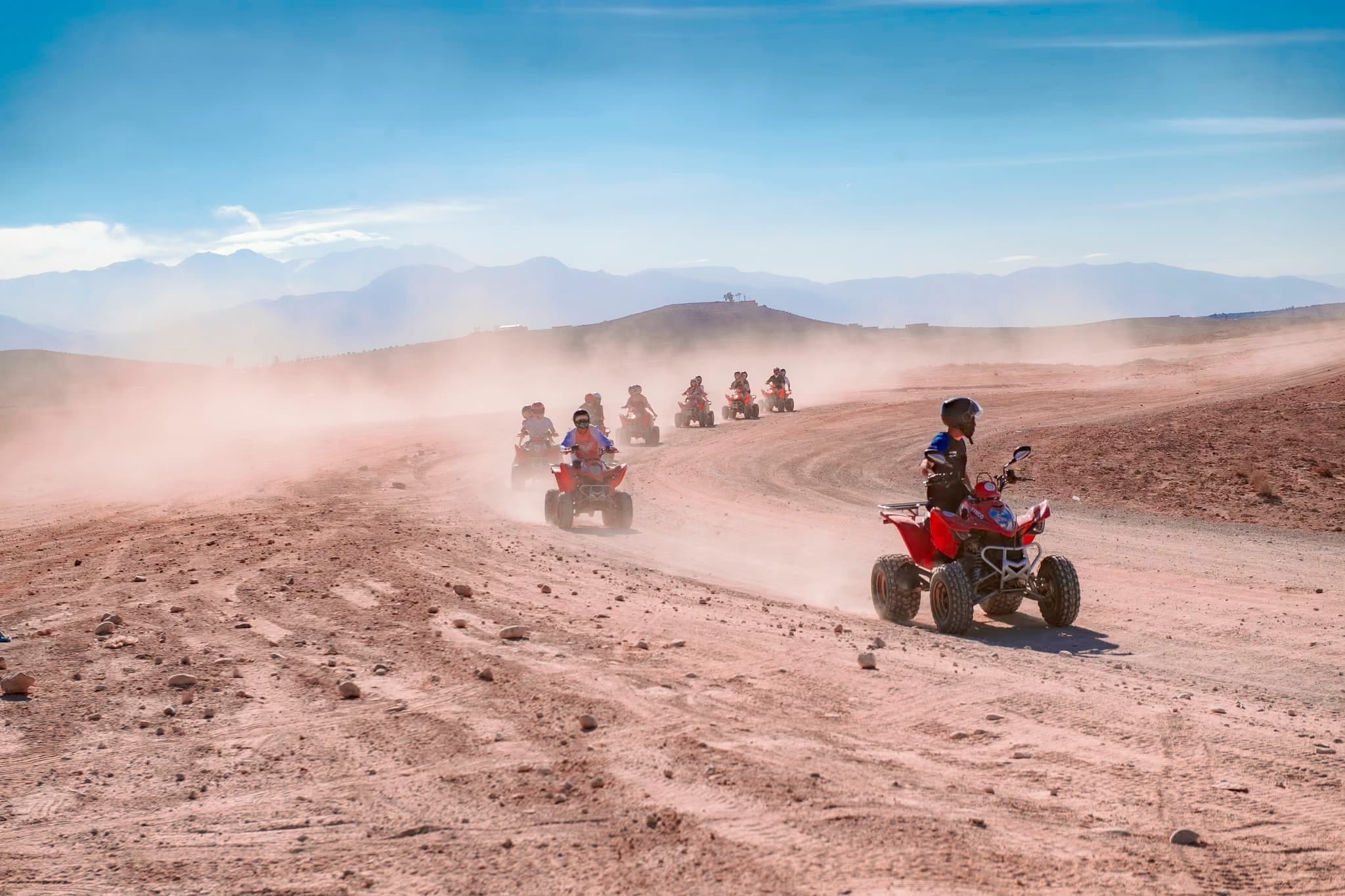
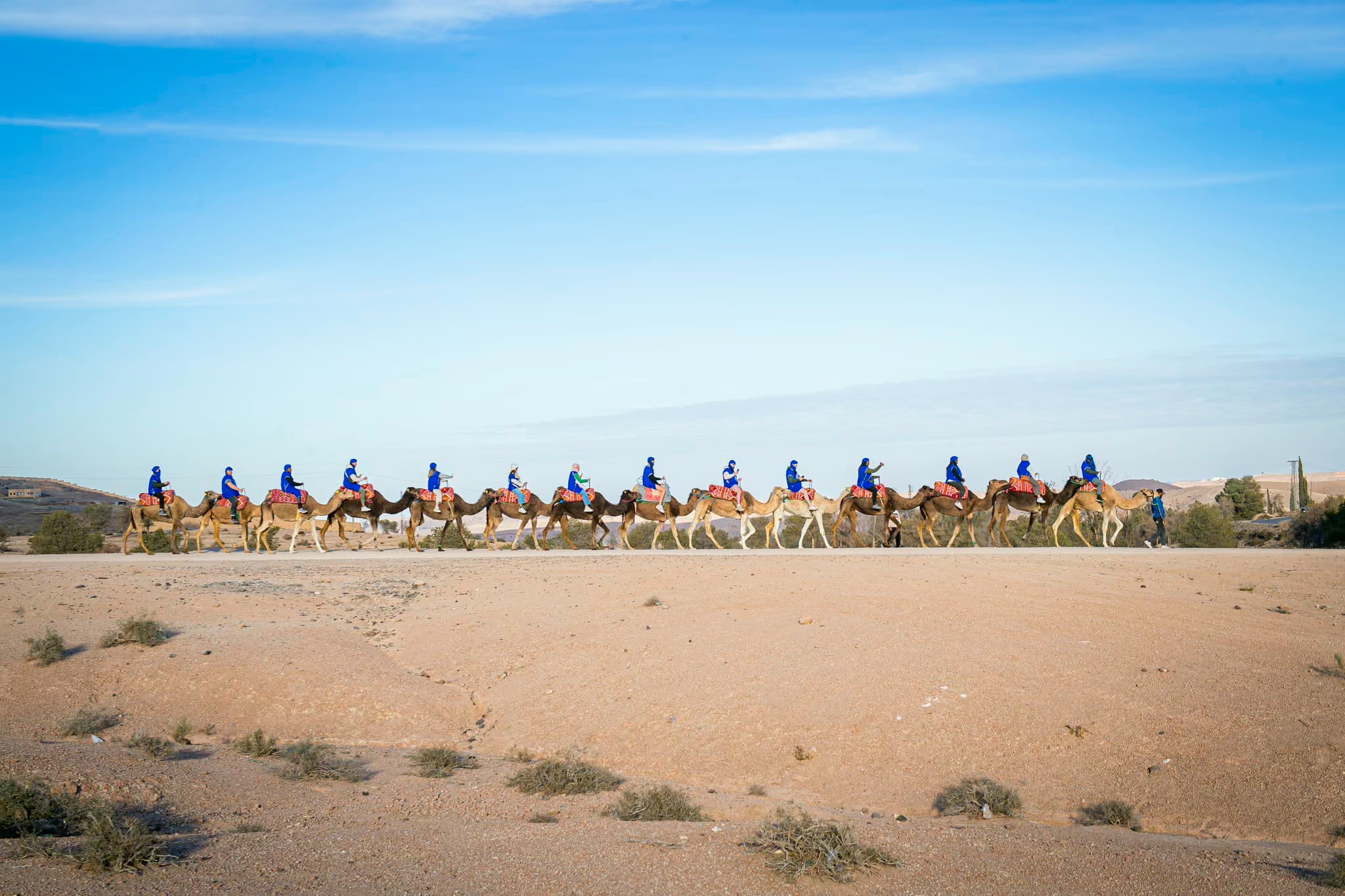
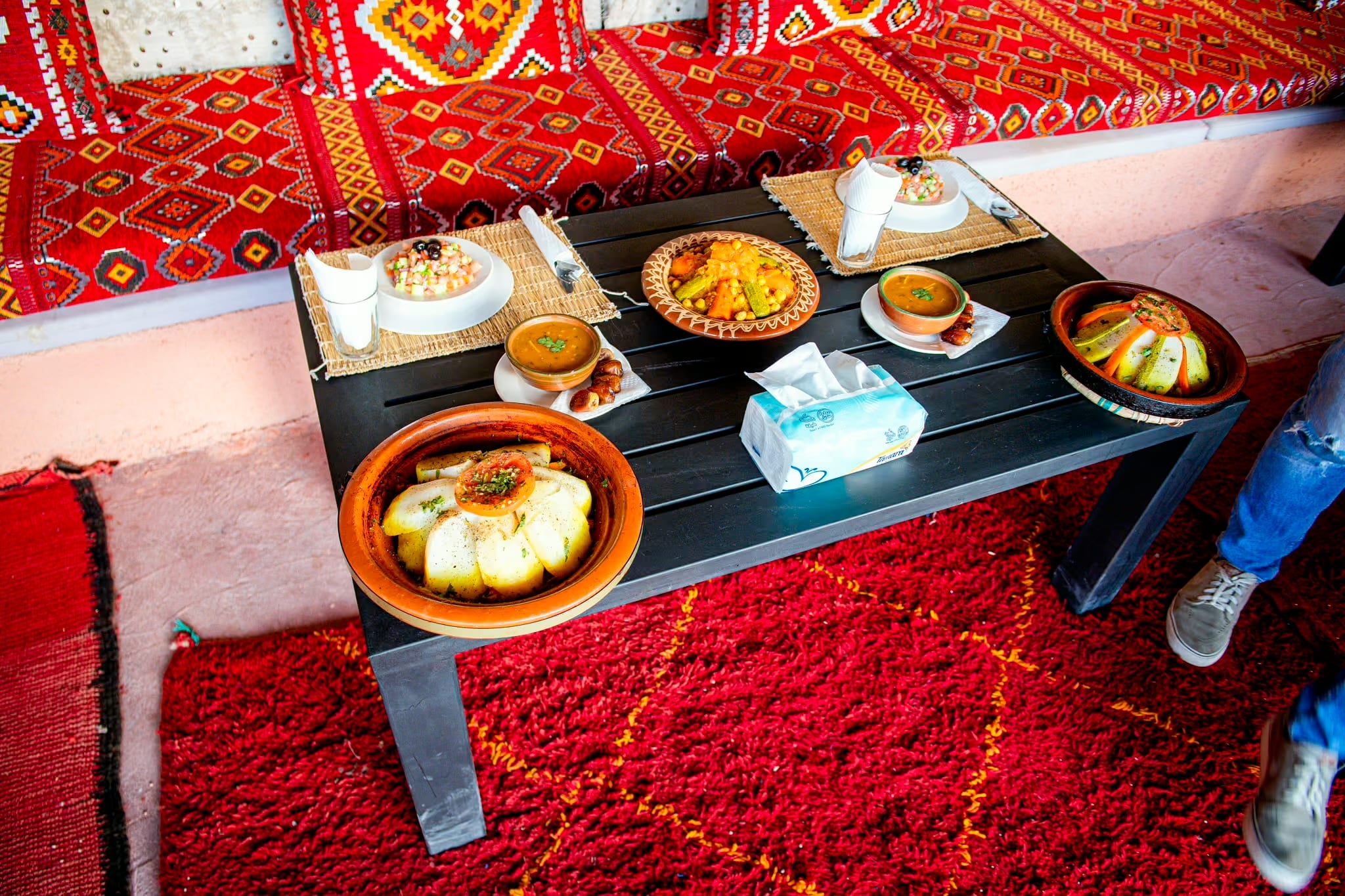
| Agafay desert | 45 minutes by road, south-west | Afternoon to sunset, or an evening | A stony plateau of pale hills, no sand dunes; quad, buggy, camel rides and dinners |
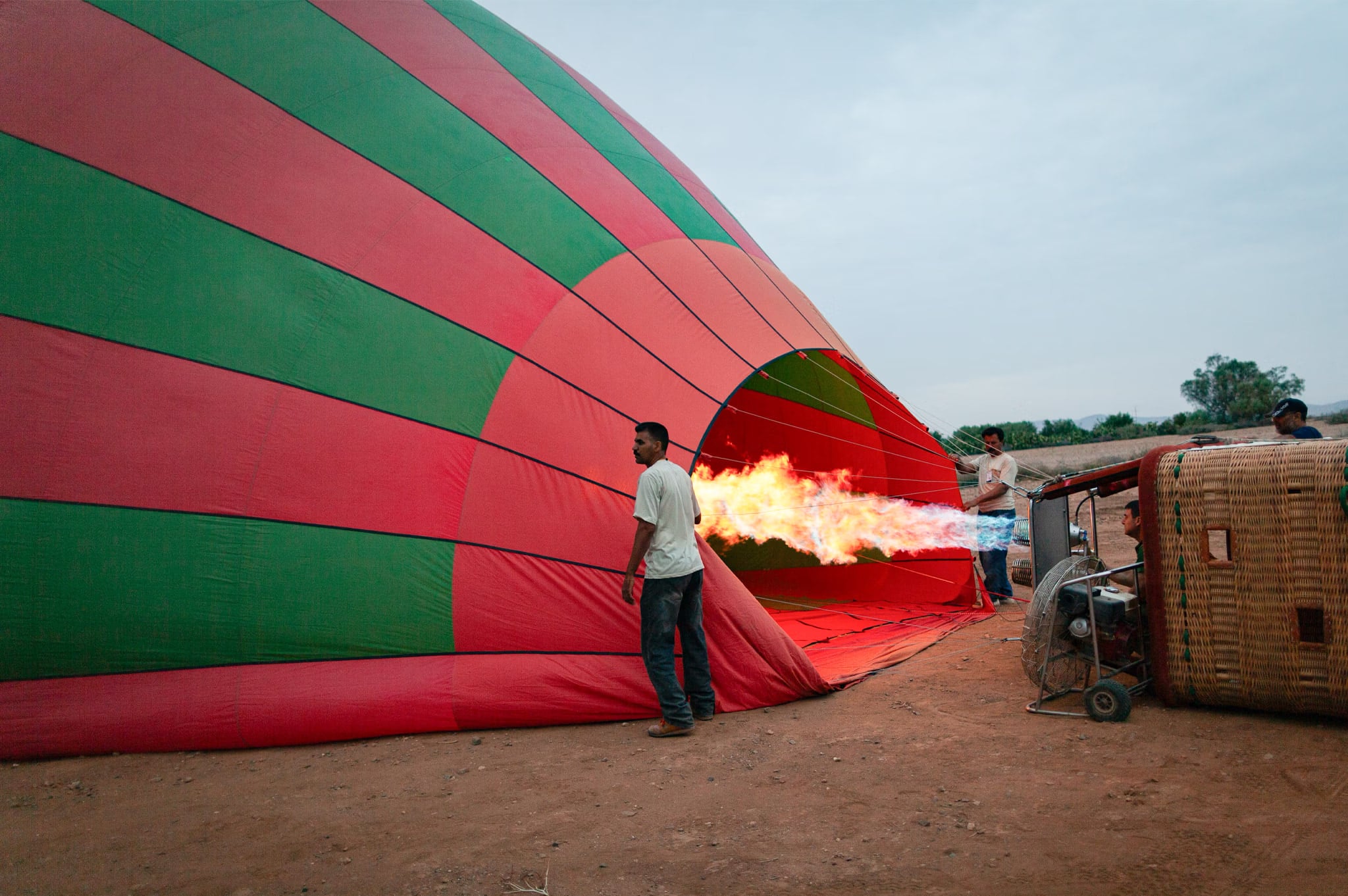
| Hot air balloon at sunrise | Hotel pickup between 4 and 6 am | Sunrise | About 40 minutes in the air, around 4 hours in all — back before the heat |
| Lalla Takerkoust lake | 45 minutes to an hour by road, south-west | Late afternoon; spring, when it is fullest | A reservoir beside the Agafay plateau, with the High Atlas behind |
| Sahara dunes (Merzouga) | Around nine hours by road | At least two nights | Not a day trip |
In Agafay, our outings last from one to five hours: a one-hour quad or camel ride, dinners of about four hours, and combinations such as 2-hour quad, camel and sunset dinner, about five hours. A return transfer from your hotel or riad can be added when you book, for a fee.
What are the main things to do in Marrakech?
Walk the medina, spend an evening on Jemaa el-Fna, browse the souks — then step out of the city for half a day. A first stay does not need a long list.
- The medina. Wander the lanes without a plan, look into the workshops and courtyards, and stop for mint tea when your feet ask for it.
- Jemaa el-Fna. The main square is busy all day and at its liveliest after dark, when food stalls, musicians and storytellers take over.
- The souks. North of the square, the covered markets are grouped by craft — leather, metalwork, textiles, spices. Go in the morning, when it is cooler and calmer.
- Our outings. Quad or buggy on the Agafay plateau, a camel ride at sunset, a dinner with live music, or a balloon flight at sunrise.
If none of the set outings fits your stay, we can build a custom day on request: tell us what you would like, and we tell you what is possible.