Camel or dromedary? The Moroccan answer
One hump or two: the difference between a camel and a dromedary, how to tell them apart, and which one you will ride in Morocco.
Short answer: a dromedary is a camel. It is the one-humped kind, and it is the only kind you will ride in Morocco.
The confusion comes from the words, not the animals. Here is how to tell them apart, and why the question matters less on the ground than it seems.
One hump or two
There are two domestic species of camel.
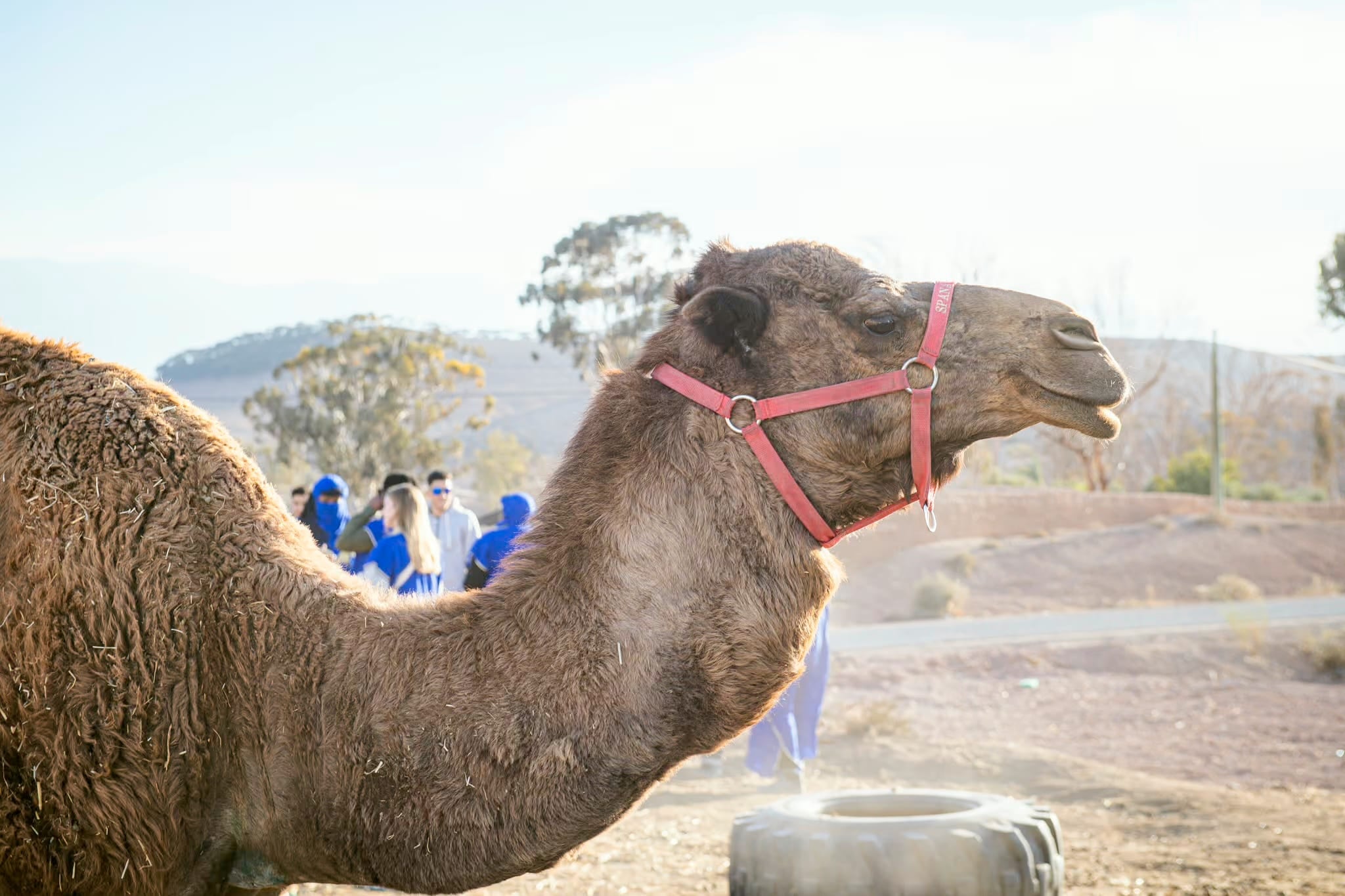
- The dromedary has one hump. It is the camel of North Africa, Arabia and the Middle East, built for hot deserts.
- The Bactrian camel has two humps. It lives in the cold deserts and steppes of Central Asia, around Mongolia and northern China.
Both belong to the same family and the same genus. Calling a dromedary a camel is not wrong; it is simply less precise.
An easy way to remember
Turn the capital letters on their side. A D — for dromedary — has one bump. A B — for Bactrian — has two.
Why the words get mixed up
In everyday English, “camel” is used for both, and most people picture the one-humped animal when they say it. French, Spanish and Italian often keep chameau, camello and cammello for the two-humped kind, which is why the question is typed so often: the word people use is not the animal they saw.
What is in the hump
Not water. The hump is a store of fat, which the animal draws on when food is scarce. That fat reserve, among other things, is what lets a dromedary go a long time between meals in the desert.
Which one you ride in Morocco
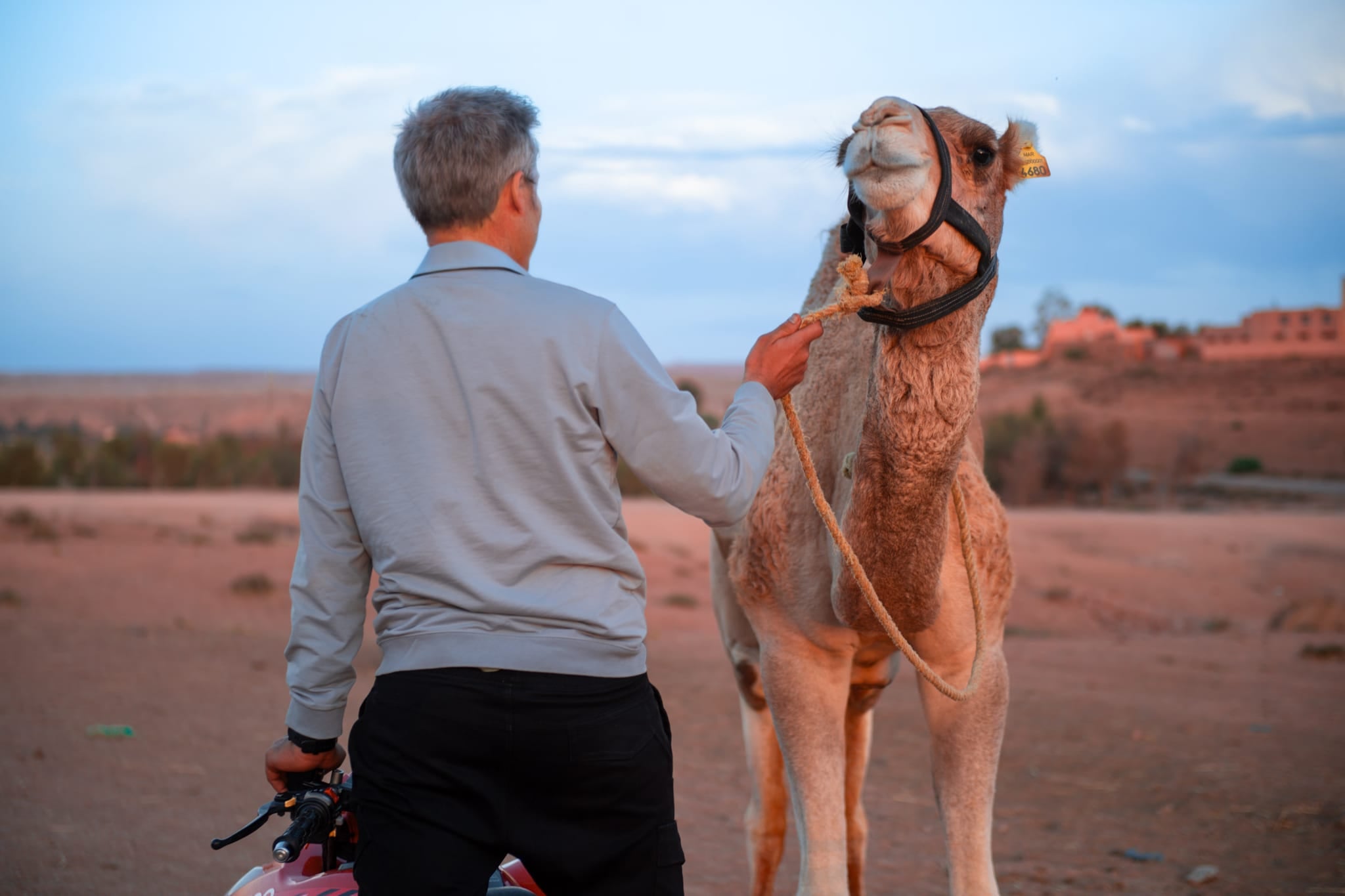
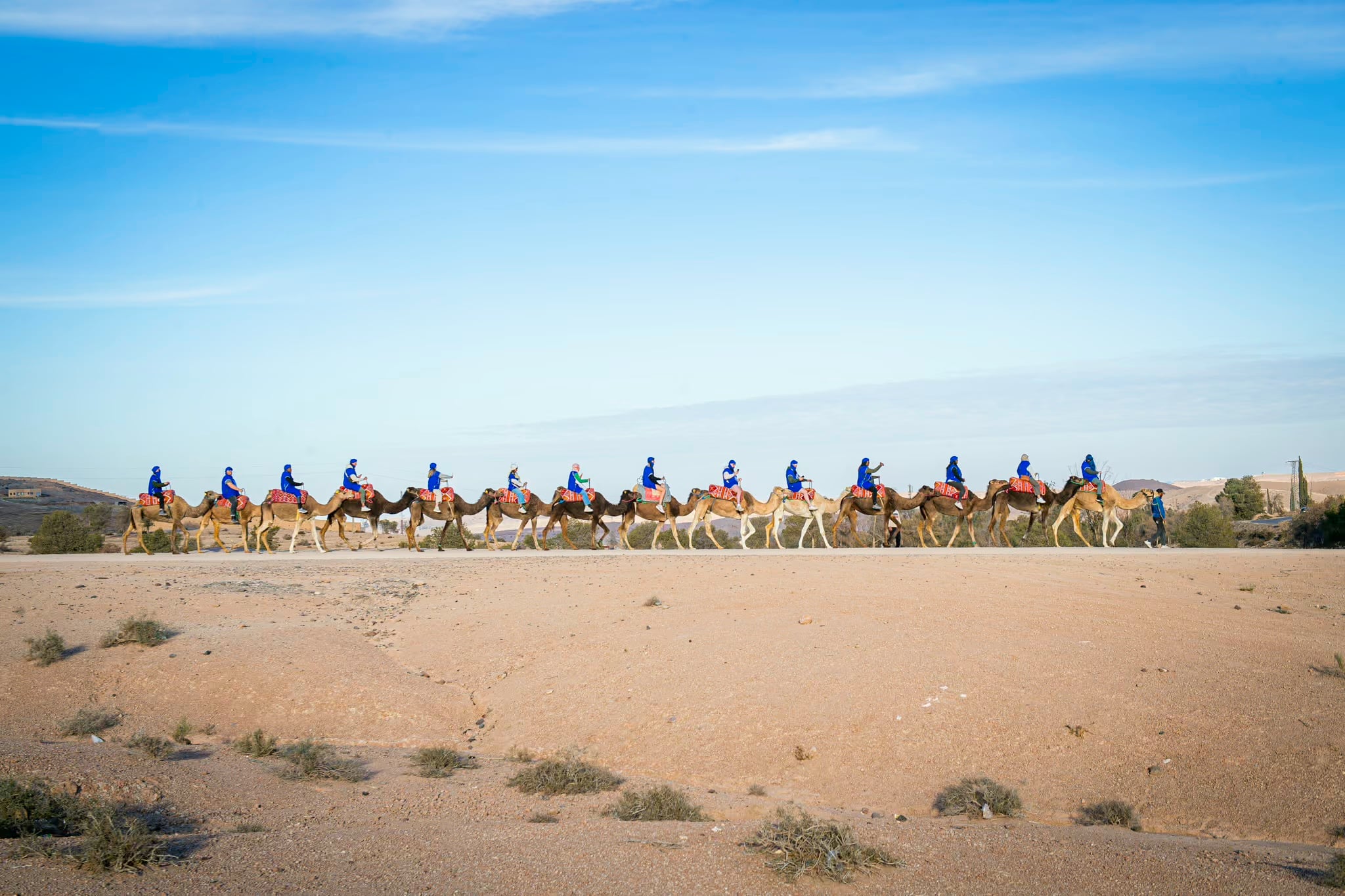
Always a dromedary. Every animal on a camel ride in Morocco — in the Sahara near Merzouga as in the Agafay desert near Marrakech — has one hump. The two-humped Bactrian camel is not part of Moroccan life at all.
So when a Moroccan tour says “camel ride”, it means a dromedary, and the saddle sits on or just behind that single hump.
What riding one is like
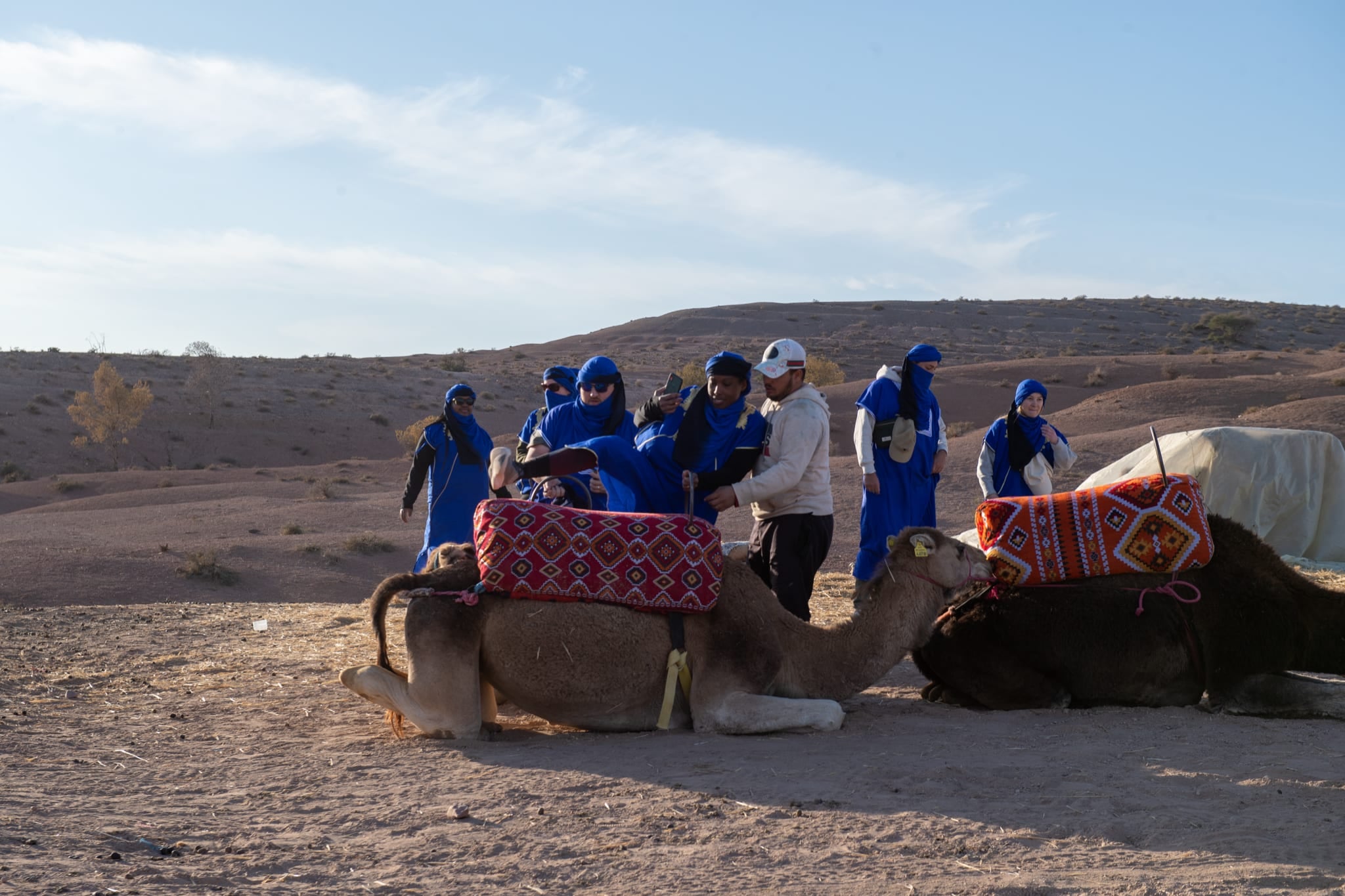
The dromedary kneels for you to get on, then rises back legs first: you lean back as it stands, and the handler tells you before it happens. After that it walks at a slow, rolling pace, and on our rides a handler leads the animals on foot the whole way — nobody steers.
Our one-hour camel ride in Agafay runs from our base 45 minutes from Marrakech, and camel rides in Marrakech lists every outing with a dromedary in it, with prices.